
Water leakage on a wall does not automatically mean there is a leaking pipe directly behind it. A wet wall, damp patch, water stain, bubbling paint or musty smell can result from a hidden plumbing leak, water seepage from an exterior wall, penetrating damp, failed bathroom waterproofing, condensation, drainage problems or another source of excess moisture.
For a homeowner dealing with dampened walls or unexplained water marks, the priority should be identifying the root cause before opening the wall, applying waterproofing products or carrying out repairs. Water can travel through plasterboard, masonry, floors, insulation and wall cavities, so the place where water becomes visible may be some distance from the actual leak.
This page explains the common causes and signs of water leakage on walls, how to distinguish faulty plumbing from penetrating damp or condensation, what you can safely check yourself and how professional leak detection can investigate a suspected hidden plumbing leak.
Why Is Water Appearing on My Wall?
Water can reach interior walls from several directions. A leaking hot or cold water pipe, failed joint or central heating pipe can release water within a wall or beneath a floor. Bathroom leaks can allow water to escape around showers, baths, toilets, wastes or failed waterproofing. Rainwater can enter exterior walls through defective brickwork, pointing, render, roofs, windows or doors, while condensation can create wet walls when humid indoor air meets a sufficiently cold surface.
The location of the moisture therefore matters, but so does when it appears. A wall that becomes wet after heavy rain presents a different diagnostic pattern from one that becomes wetter every time a shower is used. Similarly, a wet patch combined with unexplained water usage may require a different investigation from widespread mould on several cold exterior walls.
Water ingress can also originate from blocked or leaking gutters, defective downpipes, drainage problems, ground-level moisture or other building defects. This is why treating every wet wall as either a plumbing leak or rising damp can lead to the wrong repair.

Common Signs of Water Leakage on a Wall
One of the most obvious signs of water leakage is a damp patch, but hidden leaks do not always produce visible flowing water. The first sign may instead be a change in the wall finish. Paint bubbling, blistering or peeling can occur when excess moisture builds behind the surface. Plaster may soften or deteriorate, wallpaper can lift, and skirting boards or nearby flooring can swell after prolonged exposure to water.
Water stains and discolouration are also common signs. Brown, yellow or darker marks can indicate previous or ongoing moisture, although an old water mark may remain after the original leak has already been repaired. A stain therefore shows that moisture has affected the material but does not independently confirm that water is still leaking.
Mould growth and a persistent musty smell can indicate excessive moisture within the room or building materials. Condensation is one possible cause, particularly on colder surfaces, but penetrating damp and hidden plumbing leaks can also create conditions that support mould growth. A musty smell behind furniture, inside cupboards or near a wall cavity can sometimes be the only obvious sign that further investigation is needed.
Wet flooring or damaged skirting at the bottom of a wall can also be misleading. Water may be travelling down from above, but a leaky pipe beneath the floor can equally spread moisture upwards around the wall-floor junction.
Another potential clue is an unexpectedly high monthly water bill. Increased water usage has many possible explanations, but unexplained continuous meter movement when legitimate water use has been excluded can indicate water escaping somewhere on the metered supply.
Where the property has a sealed heating system, repeated boiler pressure loss combined with localised dampness near known heating pipe routes can also justify investigating for a concealed heating leak. Pressure loss alone, however, does not prove that there is a hidden pipe leak.
Plumbing Leak, Penetrating Damp or Condensation?
Distinguishing these sources is one of the most important parts of investigating water leakage on a wall.
A plumbing leak may become more likely when moisture is present regardless of the weather, a water meter shows unexplained usage, a sealed heating system repeatedly loses pressure, or the dampness changes when a particular shower, bath, toilet or basin is used. Sudden water damage can also point towards leaking plumbing or burst pipes, particularly where the affected wall contains known water or heating pipework.
Faulty plumbing can develop through damaged pipes, deteriorated joints, failed valves, loose connections or previous installation defects. However, even when defective plumbing is suspected, the visible wet spot does not tell you exactly where the leaking pipe is located.
Penetrating damp behaves differently. If moisture appears or becomes noticeably worse following heavy rain, particularly on an exterior wall, rainwater ingress should be considered. Damaged brickwork, deteriorated mortar, cracked render, defective flashing, leaking gutters, blocked downpipes and failed seals around windows and doors can all allow water to enter the building envelope.
Clogged gutters and poor drainage can also allow rainwater to overflow or collect against parts of the property. Maintaining gutters, downpipes and external drainage helps direct water away from vulnerable building materials, but an existing water ingress problem still needs its actual entry point identified.
Condensation usually follows another pattern. It commonly affects colder exterior walls, windows, external corners and poorly ventilated areas. Bathrooms, kitchens, bedrooms and spaces behind furniture are particularly susceptible where indoor humidity is high. Proper ventilation can help control condensation, but a strongly localised wet patch should not automatically be dismissed as condensation if other signs point towards a plumbing or external water source.
Is It Rising Damp or a Water Leak?
Moisture concentrated at the bottom of an interior wall is frequently described as rising damp, but the location of the dampness alone is not enough to establish the cause.
A similar moisture pattern can result from leaking buried plumbing, water spreading beneath a floor, external water penetration, drainage problems, condensation, bridged wall cavities or ground moisture. A hidden leak below floor level can make moisture content appear highest around the wall-floor junction even though the damp-proof course itself is not the source of the problem.
This distinction is important because damp-proofing will not repair leaking pipes. Equally, repairing plumbing will not solve rainwater entering through an exterior wall.
The source needs to be established before a damp-proof treatment, plumbing repair or other remedial work is selected.
Does a Wet Wall Mean the Pipe Is Directly Behind It?
No. Water can travel considerable distances through building materials before it becomes visible.
A leaking pipe beneath an upstairs floor may allow water to follow joists or other materials before eventually producing a wet spot on a wall or ceiling elsewhere. Water escaping around a shower can move behind tiles, through wall cavities or across the floor structure before becoming visible downstairs.
This is one reason opening a wall directly behind a damp patch can fail to reveal the source.
Professional investigation should follow the evidence towards the likely source rather than assuming the most visibly damaged area contains the leak. Our guide explains how to find out where a water leak is coming from.

How Can I Check for a Hidden Water Leak?
Start by observing the pattern rather than immediately opening the wall.
If the wall becomes noticeably wetter during or shortly after heavy rain, inspect the external conditions around that part of the property. Look for obvious defects such as damaged exterior finishes, overflowing gutters or failed seals, but avoid assuming that an external defect is responsible until the pattern supports it.
Next consider the plumbing around the affected area. What is directly behind, above, below or on the opposite side of the wall? A bathroom, shower, bath, toilet, basin, kitchen, radiator, water tank or known pipe route can provide useful clues. If moisture consistently increases after one fixture is used, that relationship is particularly relevant.
If you have an accessible water meter, make sure taps and water-using appliances are not operating and record the meter reading. Continued unexplained movement can indicate water usage or loss somewhere on the metered supply. A water meter cannot tell you which wall contains a leak, so meter movement should be treated as evidence that requires further investigation rather than proof of the leak location.
The timing can also help. Moisture after shower use points towards the bathroom system; moisture following rain raises the possibility of water ingress; continuous moisture may justify checking pressurised plumbing; and symptoms associated with heating operation can justify investigating the heating circuit.
Do not start cutting walls or lifting floors simply because that is where the water stain appears. If the source remains hidden, professional investigation can help reduce unnecessary destructive access.
How Professional Wall Leak Detection Works
There is no single device that can detect every water leak. A proper investigation uses the symptoms, plumbing layout and construction of the property to determine which tests are appropriate.
At MML Plumbing, this can involve moisture mapping, thermal imaging with an infrared camera, acoustic testing, hydrogen tracer gas, pressure testing, borescope inspection and targeted plumbing tests where appropriate. These methods provide different forms of evidence and should not be treated as interchangeable.
Moisture Meter and Moisture Mapping
A moisture meter can help compare moisture levels across walls, floors and surrounding building materials. By taking readings across a wider area, moisture mapping can show how far the affected zone extends and whether moisture content reduces or increases in a particular direction.
However, a high moisture reading does not prove that a leaky pipe is directly behind that point. The reading may relate to plumbing, penetrating damp, condensation, ground moisture, historic water damage or another source.
Our moisture leak detection investigations use moisture readings as evidence within the wider diagnostic process rather than treating the meter as a standalone leak locator.
Infrared Camera and Thermal Imaging
An infrared camera detects differences in surface temperature. These thermal patterns can reveal areas that warrant closer investigation, particularly around heating pipework or moisture-affected surfaces.
Cooler or warmer areas can sometimes correspond with moisture or pipe routes, but a thermal imaging camera does not see water through walls. Temperature differences can have several causes, so thermal evidence needs to be interpreted alongside other tests.
Acoustic Leak Detection
Water escaping from pressurised pipework can generate sound that specialist acoustic equipment may detect.
How clearly that sound travels depends on the pipe material, water pressure, leak size, depth, surrounding construction and background noise. Acoustic testing can therefore be useful for some hidden leaks but ineffective for others.
Hydrogen Tracer Gas
For suitable isolated and pressurised systems, hydrogen tracer gas can provide another way to investigate hidden leaks. A suitable test gas is introduced into the isolated system and specialist equipment is used to check for escaping gas.
This can be particularly useful where pipework is concealed beneath floors or within other inaccessible areas, but tracer gas is not appropriate for every type of water leakage.
Pressure Testing
Pressure testing can help establish whether a suitable water or heating system is losing pressure. It can therefore help isolate or rule out particular systems during the investigation.
Pressure testing does not independently locate the exact leak. A pressure drop establishes evidence of system loss; another method may still be required to narrow the location.
Borescope Inspection
A borescope or inspection camera can provide a direct view into certain concealed areas through an appropriate access point. It can be useful for checking wall cavities, floor voids, areas beneath baths or spaces behind sanitaryware.
The method is useful only when there is a suitable route into the area being investigated.
Why a Moisture Meter Cannot Find the Cause on Its Own
Moisture meters are particularly useful when investigating dampened walls, but they are often misunderstood.
The instrument helps identify moisture conditions within or at the surface of building materials. It does not determine whether that moisture originated from a burst pipe, slow leak, penetrating rain, condensation, drainage problem or another source.
Material type, salts and surface conditions can also influence readings.
The useful information comes from the pattern of readings combined with the rest of the investigation. Moisture mapping becomes much more informative when compared with plumbing tests, thermal observations, known pipe routes and the way the problem responds to rainfall or fixture use.
Water Leakage on an Interior Wall
Water leakage on interior walls is frequently associated with plumbing, but there are several possible sources.
Concealed hot and cold water pipes, central heating pipes, bathroom plumbing, leaking wastes, toilet connections, and water travelling from an upper floor can all produce dampness on an interior wall. A hidden leak from a leaky pipe may initially appear only as staining, paint bubbling, a musty smell or persistent dampness.
Bathrooms deserve particular attention because several water systems are concentrated in a small area. If an interior wall becomes wet whenever the shower operates, the source could be the shower supply, waste, trap, screen, silicone, grout or waterproofing behind the tiles. Testing these components separately is more reliable than assuming a pipe has burst.
Condensation and water migrating from an external part of the building can also affect interior surfaces, particularly where an internal finish is connected to a colder exterior wall.

Water Leakage on an Exterior Wall
Water affecting the internal face of an exterior wall can originate from either side.
Externally, common causes include penetrating rain, cracked render, deteriorated pointing, defective brickwork, damaged seals around windows and doors, blocked gutters, faulty downpipes and roof or flashing defects. Porous materials and damaged exterior finishes can allow repeated water seepage into the wall structure during periods of heavy rain.
Internally, concealed plumbing may still be responsible, particularly where water pipes run through or adjacent to the exterior wall.
The weather pattern is therefore important. If moisture repeatedly appears after rainfall but remains stable during dry weather, building-envelope water ingress becomes more likely.
For a detailed examination of brickwork-specific problems, including mortar joints, wind-driven rain and water penetration through masonry, see our guide to finding a water leak in a brick wall.
MML Plumbing investigates plumbing and water-system leaks. Where the evidence points towards roofing, brickwork, structural defects or external rainwater penetration rather than plumbing, an appropriate building, roofing or damp specialist may be required.
Water Leakage in Cavity Walls
Cavity walls can make moisture diagnosis particularly difficult because water does not necessarily travel straight from the exterior surface to the corresponding point indoors.
Rain penetration, defects around openings, cavity bridging, insulation problems, damaged external materials and plumbing passing through or close to the wall can all contribute. Problems involving cavity wall ties or other wall components can also influence moisture movement and deterioration.
A wet interior surface should therefore not automatically be diagnosed as a cavity-wall problem. The surrounding conditions need to be considered before remedial work begins.
Can a Leaking Pipe Cause Damp at the Bottom of a Wall?
Yes.
A concealed pipe leaking beneath a floor can spread water through the floor structure until moisture reaches the wall-floor junction. Moisture readings may consequently be highest at the bottom of the wall and gradually reduce further up.
That pattern can resemble what is commonly described as rising damp.
This is why plumbing should be considered during an investigation where the cause of lower-wall dampness remains uncertain, particularly if other evidence suggests water loss.
Can a Shower Leak Make a Wall Wet?
Yes. Shower leaks are a common reason for water appearing on adjacent walls, floors or ceilings below.
The source may be a leaking supply connection, but it can equally be a failed waste connection, trap, shower-screen seal, damaged silicone, failed grout or defective waterproofing behind the tiled surface.
For example, water can pass behind tiles during shower use and travel through the structure without any pressurised pipe leaking.
Testing the shower components individually can establish which activity causes the water to escape and helps avoid unnecessary pipe repairs.
Can a Heating Pipe Leak Cause Water Leakage on a Wall?
Yes. Central heating pipes often run beneath floors and sometimes through walls or service voids.
A concealed heating leak may be considered where the boiler repeatedly loses pressure, and there is localised wall moisture, wet flooring or another sign of water loss near known heating pipe routes.
However, boiler pressure loss has several possible causes. It should not automatically be interpreted as proof of leaking concealed pipework.
Testing the heating circuit can establish whether the system itself is losing pressure before more targeted leak detection is carried out.
What If the Wall Is Wet Only After Heavy Rain?
A strong relationship between rainfall and wet walls points towards rainwater penetration rather than an ordinary pressurised plumbing leak.
Damaged exterior brickwork, deteriorated mortar, cracked render, roof defects, faulty flashing, window or door seals, clogged gutters and leaking downpipes can all allow water ingress during heavy rain.
Repeated water penetration through porous materials can gradually saturate parts of an exterior wall and cause staining, paint damage, mould or dampness internally.
The external source should be corrected before damaged internal finishes are redecorated. Painting over the wall or applying a waterproof sealer without addressing the entry point can hide the symptom while water continues entering the structure.
Can Condensation Cause Wet Walls?
Yes. Condensation can produce visibly wet walls, mould growth, musty smells and damaged paint without any leaking pipe being present.
Warm humid air contains water vapour. When that air reaches a sufficiently cold surface, moisture can condense onto the wall. This commonly occurs around windows, exterior corners, bathrooms, kitchens, bedrooms, poorly ventilated spaces and behind furniture where airflow is restricted.
Heating, insulation, humidity and proper ventilation all influence the amount of condensation that develops.
However, condensation should not become a convenient explanation for every wet wall. A sudden or strongly localised damp patch, particularly when accompanied by unusual water usage or other plumbing symptoms, may require further investigation.
What Damage Can Water Leakage on a Wall Cause?
Persistent wall seepage can affect far more than the paint.
Water can damage plaster, wallpaper, skirting boards, flooring, insulation, timber and other building materials. Prolonged dampness can also contribute to mould growth and deterioration of finishes, while water travelling through the structure may eventually affect ceilings or rooms below.
A slow leak can be particularly difficult because relatively small amounts of water may escape continuously without producing an obvious burst pipe or visible stream of water. Our guide explains how even a small leak can cause major property damage.
The longer the source remains unresolved, the greater the area of moisture that may require drying and reinstatement.
This is why early investigation matters. The objective is not simply to make the wet spot disappear; it is to identify and stop the source so that further damage does not continue.
What Should I Do if Water Is Leaking Through My Wall?
If water is actively leaking, first protect the property and make the area safe. Move vulnerable belongings away from the wet area and, if a plumbing leak appears likely and it is safe to do so, isolate the appropriate water supply or main internal stopcock.
Stop using a bath, shower, toilet or appliance if its operation clearly makes the leak worse. If water has reached electrical sockets, lighting or equipment, avoid the affected electrical installation and obtain appropriate electrical advice where necessary.
Photograph the visible damage before it changes. These photographs can also help demonstrate how the moisture developed over time.
Do not immediately cut open the wall because that is where the water appears. If the source is concealed, determine whether the evidence points towards plumbing, a bathroom fixture, drainage, condensation or external water ingress before destructive access is considered.

How Do You Fix Water Leakage on a Wall?
The correct repair depends entirely on the cause.
If testing confirms a plumbing leak, the damaged pipe, joint, valve or fitting needs to be accessed and repaired appropriately. Once the source has been identified, our water leak repair service may be suitable where the required work falls within our plumbing scope.
If water is escaping from a bathroom because of failed silicone, grout, waste connections or waterproofing, the defective component or installation needs to be corrected. Simply adding more silicone without establishing where water is escaping is not a reliable solution.
Where rainwater is penetrating an exterior wall, the relevant building defect needs attention. Depending on the root cause, this may require a roofer, builder, brickwork contractor, window specialist or damp/building specialist rather than a plumber.
Condensation requires a different approach again. Ventilation, indoor humidity, heating and thermal conditions should be assessed rather than repairing plumbing that is not leaking.
Should You Seal or Waterproof a Wet Wall?
Not until the source has been identified.
Waterproof paint, sealants and other waterproofing measures cannot repair leaking plumbing. Likewise, coating the inside of a wall does not correct defective pointing, clogged gutters, failed external seals or another source of penetrating water.
In some types of construction, applying an inappropriate impermeable coating can also interfere with the wall’s ability to release moisture.
Once the actual cause has been repaired and the building materials have dried appropriately, suitable finishes can be reinstated. A stain-blocking primer may sometimes be needed where old water marks would otherwise bleed through new paint, but that is part of reinstatement rather than leak repair.
The principle is simple:
Treat the source of the water first, then repair the damage it caused.
How Long Does a Wall Take to Dry After a Water Leak?
There is no reliable fixed drying period.
Drying time depends on the amount of water released, how long the leak existed, the type and thickness of the wall, insulation, plaster, surrounding building materials, temperature, humidity and ventilation.
A surface can also feel dry while moisture remains deeper within the material.
For that reason, a recently affected wall should not automatically be painted, sealed or covered immediately after the leak is repaired. The affected materials should be allowed to dry and, where necessary, moisture levels can be monitored before reinstatement.
When Should I Arrange Professional Leak Detection?
Professional investigation is appropriate when water is visible, but the source cannot be established, a damp patch repeatedly returns, several possible plumbing sources exist, or previous repairs have failed to resolve the problem.
It can also be useful when the water meter shows unexplained usage, a heating system repeatedly loses pressure, or someone has suggested opening walls or floors without first establishing where the leak is likely to be.
MML Plumbing carries out non-invasive leak detection investigations across London and North London. The investigation is selected according to the symptoms and plumbing system rather than relying on one tool for every situation.
Where appropriate, our findings can be documented with photographs, test results and a detailed written report explaining what was investigated, what evidence was found and the recommended next steps.
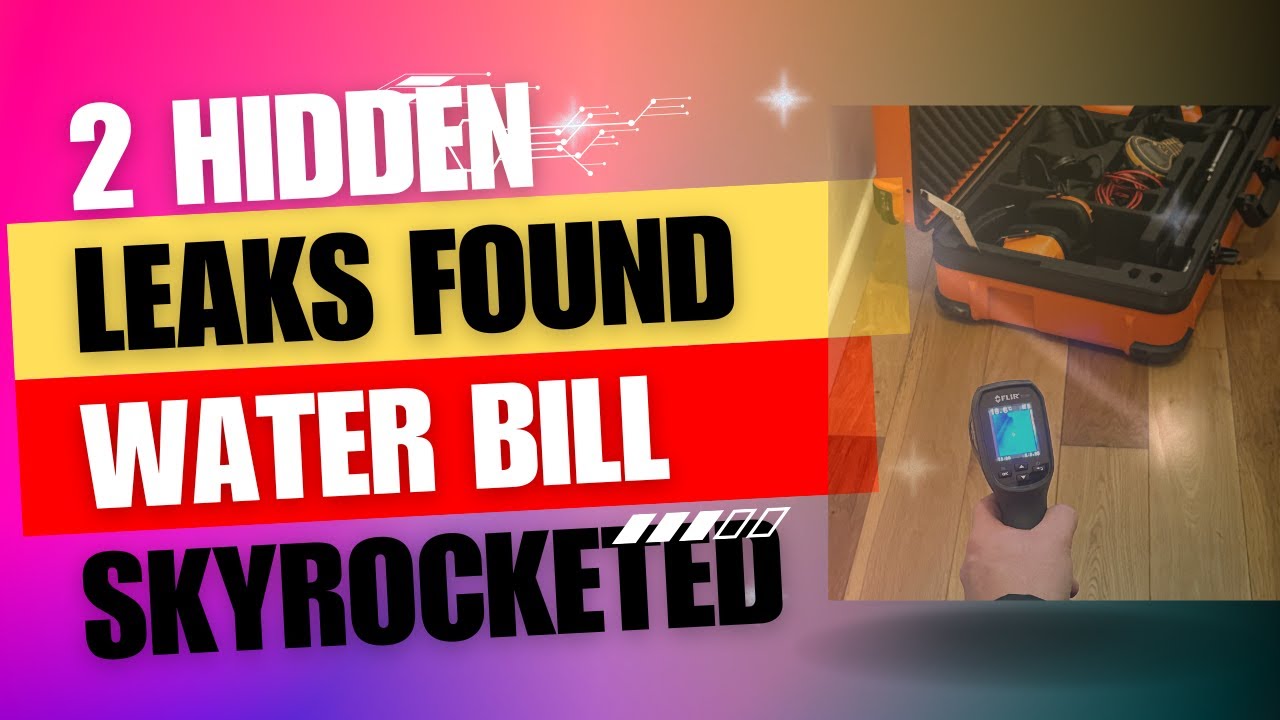
How we found hidden water leaks without damaging your home

Water Leakage on a Wall: What You Need to Remember
A wet wall is a symptom, not a diagnosis.
Water leakage on a wall can come from a hidden plumbing leak, bathroom, central heating pipework, rainwater penetration, wall seepage, condensation, drainage or another moisture source.
The correct sequence is to identify the moisture source, confirm the cause, carry out the appropriate repair, allow the affected building materials to dry and then reinstate the damaged finishes.
Opening walls, applying waterproof coatings, injecting a damp-proof course or replacing plumbing before establishing the root cause can result in unnecessary work while the original problem continues.
If you suspect a concealed plumbing leak in London, call us to discuss a professional leak investigation.
Buying a Home? Know What Plumbing Repairs You May Face
Get a clearer picture of the property’s plumbing before you commit. MML Plumbing can assess accessible systems, explain any concerns we find, and help you plan your next steps. Request a pre-purchase plumbing survey quote.
FAQ
Question not answered? Ask A Question by email
How can I tell if water on my wall is from a leaking pipe?
Look at how the moisture behaves. A plumbing leak becomes more plausible when the wall remains wet regardless of rainfall, the water meter shows unexplained usage, boiler pressure repeatedly falls, or the dampness changes when a particular plumbing fixture is used. These are diagnostic clues rather than proof. If the source remains hidden, professional testing may be required.
Why is my wall wet when there is no visible leaking pipe?
Water can travel through floors, wall cavities, plaster and other building materials before becoming visible, so the wet spot may be some distance from the source. The moisture could also be caused by penetrating rain, condensation, failed bathroom waterproofing, drainage or another building defect. In some cases, a persistent musty smell or recurring damp patch may be the main indication of a concealed problem.
Can a moisture meter find a hidden water leak in a wall?
A moisture meter can identify and map areas with elevated moisture content, but it cannot independently establish whether the source is leaking plumbing, penetrating damp, condensation or another moisture problem. Professional diagnosis may combine moisture mapping with pressure testing, thermal imaging, acoustic leak detection, hydrogen tracer gas, borescope inspection and other targeted tests where appropriate.


