
No guessing. No damage. Just clear answers.
What Happens During an Underground Leak Detection Investigation
A professional underground water leak detection investigation is not a single test. It is a structured sequence of diagnostic phases, with each stage narrowing the search area until the exact leak location is identified. Understanding these phases helps explain why a thorough investigation takes time and why professional leak detection achieves significantly greater accuracy than simply excavating based on suspicion alone.
Phase one: initial property assessment and symptom review. This stage typically takes between 30 and 45 minutes. The engineer assesses visible symptoms throughout the property, including damp patches on walls or floors, mould growth, discoloured surfaces, wet areas in gardens, unexplained water consumption, and changes in water pressure. The water meter is checked to establish whether water is continuously flowing through the system. A moving water meter when no taps or appliances are operating is one of the strongest indicators that a hidden leak is active. The engineer also reviews the property’s history, including when symptoms first appeared, whether conditions have worsened over time, and whether any recent plumbing work may be relevant. This assessment helps determine which sections of pipework require testing and which leak detection methods are likely to provide the most accurate results.
Phase two: system isolation and pressure testing preparation. This phase generally takes between 15 and 30 minutes. The engineer isolates different sections of the plumbing system to identify which pipe run is losing water. Baseline pressure readings are recorded, and the water meter is monitored to establish whether the leak originates within the property’s private supply pipe or elsewhere within the system. In many older London properties, where plumbing layouts have been altered repeatedly over several decades, this phase may take longer because pipe routes are often undocumented and isolation valves may be concealed, inaccessible, or located in unexpected positions. Additional information about pressure testing and underground leak investigations can be found within our underground mains leak detection FAQs.
Phase three: active detection using specialist equipment. This is the core of the investigation and typically takes 2 to 4 hours, depending on the complexity of the leak and the number of detection methods required. The engineer deploys acoustic listening devices, tracer gas, thermal imaging cameras, moisture meters, and other specialist equipment in sequence, narrowing down the leak location with each method until the exact point is confirmed. This phase takes the longest because underground leaks are concealed beneath soil, concrete, screed, or paving, and the detection equipment must read signals through these covering materials to locate the escaping water beneath.
Phase four: documentation and reporting. This takes 30 to 45 minutes. The engineer marks the confirmed leak location on the ground or floor surface, photographs and maps the position relative to property features, and prepares a detailed written report including photographs, thermal images, acoustic readings, moisture data, and repair recommendations. This report is designed to meet insurance requirements, as most buildings insurance policies include trace and access cover that funds the cost of locating hidden leaks, and the report forms the basis of the trace and access claim.
These phases overlap in practice, but together they account for the 3 to 6 hour range that most residential investigations require.
Typical Timeframes by Property Type
The duration of an underground water leak detection investigation varies significantly depending on the type of property, the complexity of the pipe network, and the access available.
Standard residential properties with 2 to 3 bedrooms typically require 3 to 4 hours. A supply pipe leak beneath a front path, driveway, or garden in a semi-detached or terraced house is the most common scenario. The pipe run is relatively short, the access is usually straightforward, and acoustic detection or tracer gas can narrow down the leak location within the first couple of hours. The remaining time is spent confirming the exact point and documenting the findings.
Larger residential properties with 4 or more bedrooms typically require 4 to 5 hours. Extended supply pipes running from the property boundary across large gardens, multiple supply lines serving different parts of the house, underfloor heating systems embedded in screed, and greater floor areas to scan with thermal imaging and moisture meters contribute to the longer duration. Properties with annexes, separate garage buildings, or garden offices with independent water supplies add further complexity.
Victorian and Edwardian terraces across London often require 4 to 5 hours, even when they are relatively small. This is because the plumbing has typically been modified multiple times over the life of the building. Original lead or iron supply pipes may have been partially replaced with copper or plastic at different periods, creating systems where no single detection method works optimally along the entire pipe run. Party walls, limited external access, narrow front gardens, and underground pipes running beneath dense London clay add time to the acoustic and tracer gas phases.
Converted flats in period buildings typically require 4 to 5 hours because of shared supply lines, the need to coordinate access with other residents for system isolation, complex riser pipework serving multiple floors, and the difficulty of determining which flat’s pipework is responsible for the leak.
Small commercial properties typically require 5 to 7 hours. Multiple pipe networks serving supply, heating, and drainage systems, restricted working hours, fire safety systems, and the need to minimise disruption to business operations extend the investigation. The engineer may need to test each system independently and work around the operational requirements of the premises.
Large commercial and multi-storey buildings can require 6 to 8 hours or more. Extensive pipework, multiple isolation zones, deep-buried services, plant rooms, service ducts, and the potential for multi-visit investigations where different zones need to be tested at different times push the duration toward a full working day. In some cases, the investigation spans two visits when tracer gas dwell times or access restrictions prevent completion in a single session.


How Each Detection Method Affects Duration
Each detection method has its own time profile, and most investigations use several methods in sequence. The methods selected depend on the pipe material, water pressure, burial depth, and ground conditions at the property.
Acoustic leak detection typically requires 45 to 90 minutes for a comprehensive listening survey. Ground microphones and acoustic sensors are placed at multiple points along the suspected pipe route to detect the sound of water escaping from pressurised underground pipes. The engineer listens at each point, compares signal strength, and narrows down the area where the sound is strongest. For longer pipe runs, acoustic correlators measure the time delay between signals at two points and calculate the leak position between them. Acoustic detection works best on metal pipes with adequate water pressure and produces results relatively quickly when conditions are favourable. In plastic pipes or in noisy urban environments, acoustic signals can be weaker, which may push the investigation toward tracer gas for confirmation.
Hydrogen tracer gas testing typically adds 1 to 2 hours to an investigation. The process involves isolating the suspected pipe section, draining the water, and introducing a safe gas mixture of approximately 5 per cent hydrogen and 95 per cent nitrogen into the pipe. The gas escapes through the leak point and rises through the covering material to the surface, where a sensitive detector identifies the strongest concentration. The key time factor is the dwell period, the time needed for the gas to travel from the leak point through the ground to the surface. For shallow pipes under loose soil, the gas reaches the surface within minutes. For deeper pipes under concrete slabs or compacted London clay, the dwell period can extend to 1 to 2 hours or longer. This waiting time is unavoidable because rushing the scan before the gas has fully migrated produces unreliable results.
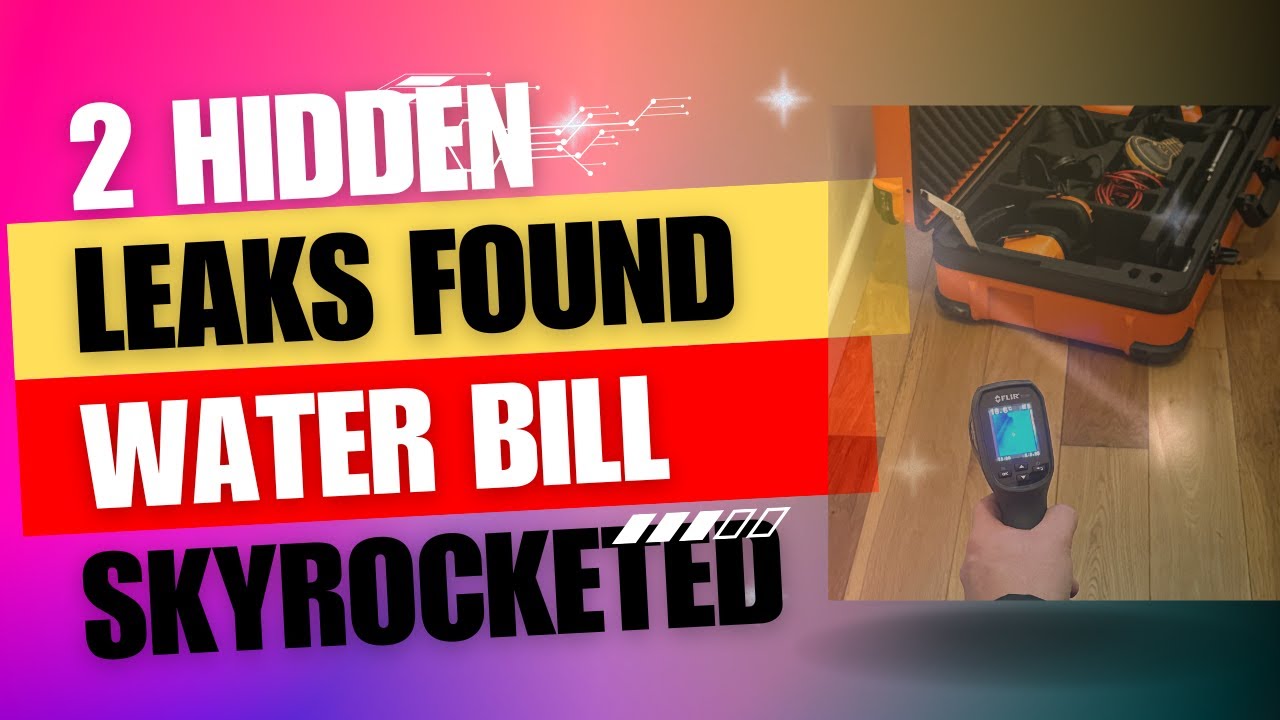
Thermal imaging surveys typically take 30 to 60 minutes, depending on property size. The thermal imaging camera scans floors, walls, and ground surfaces to detect temperature differences caused by hidden moisture or escaping water. Hot water leaks from heating systems create warm spots on the surface above. Cold water leaks create cool areas through evaporation. Thermal imaging is fast because the camera scans large areas in seconds, but the engineer needs time to interpret the patterns, cross-reference with known pipe routes, and rule out temperature anomalies caused by sunlight, draughts, or heating equipment rather than leaks.
Moisture mapping adds 20 to 30 minutes. Moisture meters are used to measure moisture content in walls, floors, and building materials at multiple points, building a picture of where water from the leak has spread through the property. This helps confirm the direction of water travel and points the investigation back toward the leak source.
Pressure testing takes 15 to 30 minutes per pipe section. Each section of the plumbing system is isolated, pressurised, and monitored for pressure drops. This confirms which pipe run is leaking and rules out sections that are sound, focusing the subsequent detection methods on the confirmed leaking section only.
Borescope inspection adds 30 to 45 minutes when needed. A small camera on a flexible cable is inserted through an access point to visually confirm the pipe condition at the suspected leak location. The borescope provides direct visual evidence of cracks, corrosion, joint failures, or active leaks inside the pipe or wall cavity. It is used after other methods have narrowed down the area, and the engineer needs visual confirmation before marking the location for repair.
In a typical investigation, the engineer starts with pressure testing to confirm which system is leaking, then deploys acoustic detection to narrow the search area, follows with thermal imaging or tracer gas to pinpoint the exact location, and uses moisture mapping and borescope inspection to confirm and document the findings. The total time across these methods accounts for the 2 to 4-hour active detection phase.

Factors That Extend Investigation Time
Several factors specific to London properties and underground leak scenarios can push the investigation beyond the standard 3 to 6-hour timeframe.
Pipe depth. Supply pipes buried deeper than about 600mm beneath the surface take longer to detect because acoustic signals weaken with depth, tracer gas takes longer to rise through the covering material, and thermal imaging cannot detect temperature changes through thick ground cover. Pipes buried a metre or more below grade, particularly under extensions, driveways, or garden features built after the original installation, can extend the tracer gas dwell time to 3 to 4 hours on its own.
London clay. Much of North London sits on dense clay soil that absorbs sound waves and slows tracer gas migration. Acoustic signals attenuate faster in clay than in sandy or gravelly soil, which means the engineer may need to place ground microphones at more points along the pipe route and spend more time interpreting weaker signals. Tracer gas percolating through dense clay takes longer to reach the surface than through loose or porous ground.
Concrete slabs and hard surfaces. Leaks beneath concrete floors, paved driveways, and tarmac surfaces are slower to detect because the covering material impedes both gas migration and sound transmission. The density of concrete means tracer gas dwell times can extend significantly, and acoustic signals from water escaping beneath concrete are often weaker than from pipes beneath soil or loose fill.
Multiple leaks. When the investigation reveals more than one leak in the system, each leak requires its own detection sequence and confirmation. A supply pipe leak coinciding with a separate central heating system leak is more common than many property owners expect, particularly in older buildings where the age and condition of the heating system match that of the supply pipework. Each additional leak point can add 1 to 2 hours to the investigation.
Travelling water. Water from an underground leak does not always surface directly above the leak point. It travels through soil, along pipe channels, through voids, and across screeds before emerging as a damp patch on a floor or wall some distance from the source. This means the engineer must detect the leak at its actual origin rather than where the symptoms appear, which requires a wider investigation area and more detection points.
Access restrictions. Terraced houses with narrow front paths, properties fronting busy roads, shared entrances in blocks of flats, meters buried under paving slabs or behind locked chambers, and commercial buildings with restricted working hours or key-holder coordination requirements can add 30 to 60 minutes to the investigation. In converted flats where multiple properties share a supply pipe, isolating sections for pressure testing or tracer gas requires arranging access with neighbours, which takes time and sometimes requires rescheduling parts of the investigation.
Modified plumbing in older properties. Victorian and Georgian properties across Camden, Islington, Barnet, Hackney, and Haringey often have pipe systems that have been modified multiple times. Original lead supply pipes were partially replaced with copper, then later sections were swapped for plastic, creating systems where acoustic detection works well on one section but poorly on the next. The engineer must adapt the detection method to each section of pipe, which adds time compared to a property with a single consistent pipe material throughout.
How to Prepare Your Property to Reduce Investigation Time
Several simple steps before the engineer arrives can help the investigation proceed efficiently and avoid unnecessary delays.
Clear access to the water meter, any external stop valves, and the areas where symptoms are visible. If damp patches are behind furniture, move the furniture before the visit. If the meter is under a heavy paving slab or behind garden items, clear it ahead of time.
Note your water meter reading over 24 hours before the visit. Check the reading in the evening, use no water overnight, and check again in the morning. If the reading has changed, water is escaping from the system, and this information helps the engineer confirm the leak quickly.
If a central heating system leak is suspected, keep the heating running before the visit. Thermal imaging detects temperature differences most effectively when the system is at operating temperature. Turning the heating off the night before and leaving it cold reduces the thermal contrast and may add time to the thermal imaging phase.
Have recent water bills available so the engineer can see whether consumption has increased and by how much. Provide any information about recent plumbing work, known pipe routes, property extensions, or previous leak investigations. Building plans, if available, help the engineer identify underground pipe routes faster.
Ensure the engineer can access the interior of the property, particularly ground-floor rooms, kitchens, bathrooms, and any rooms showing symptoms. If the property is a flat, confirm whether the building manager, concierge, or neighbours need to be notified in advance for access to shared areas, risers, or plant rooms.
These preparations do not guarantee a shorter investigation, but they remove the most common delays and allow the engineer to start the active detection phase sooner.
What Happens After the Investigation?
Once the leak location is confirmed, the engineer marks the precise point on the ground or floor surface and explains the findings in person. A detailed written report is produced, typically delivered as a same-day digital document with full insurance documentation following within 24 hours.
The report includes photographs, thermal images, acoustic readings, moisture data, the confirmed leak location measured from fixed reference points, a description of the pipe failure and its cause, and recommendations for repair. This documentation is formatted to support trace and access claims with UK insurance providers.
The repair itself is a separate phase from the detection investigation. Once the exact location is confirmed, excavation is targeted at that specific point only. Instead of digging along the entire pipe route, the repair team opens up a small area at the confirmed location, fixes or replaces the damaged section of pipe, pressure tests the repair to confirm it holds, and reinstates the surface.
This targeted approach is the reason non-invasive leak detection saves a high cost compared to traditional methods. The detection takes a few hours. The repair takes a few hours. The alternative, digging exploratory trenches until the leak is found by trial and error, can take days, cost far more, and cause unnecessary damage across a wide area.

Does Home Insurance Cover the Investigation Time?
Most building insurance policies include trace and access cover that funds the cost of a professional leak detection investigation, typically up to a limit of £5,000 per claim. This covers the specialist’s time on site, the detection methods used, and the production of the detailed written report. Some higher-tier and landlord insurance policies offer limits of £10,000 or more.
The pipe repair itself is claimed separately under escape of water or underground services cover, and is only funded if the damage was sudden and accidental rather than caused by gradual wear and tear.
Notifying your insurer before the investigation begins is important, as most policies require prior notification before a trace and access claim is valid. Having your policy number and details available on the day of the investigation allows the engineer to format the report to meet your specific insurer’s requirements.
The investigation duration does not normally affect the cost or the insurance claim, as most leak detection specialists charge a fixed price for the investigation rather than an hourly rate. Whether the investigation takes 3 hours or 6 hours, the fee and the insurance claim amount remain the same for standard residential surveys.
Real Leak Detection Examples From North London Homes


Book an Underground Leak Detection Investigation
If you suspect a hidden water leak beneath your property and want to know how long the investigation will take for your specific situation, a professional leak detection survey gives you accurate answers and a detailed report, typically within a single visit of 3 to 6 hours.

