


No guessing. No damage. Just clear answers.
Common Causes of Underfloor Heating Pipe Leaks
Poor Installation and Damaged Heating Pipes
Installation defects can contribute to underfloor heating leaks, particularly where pipes have been damaged during installation or connected incorrectly.
Excessively tight bends, kinks, unsuitable fittings and poorly made joints may create weak points in the system. Damage can also occur when pipework is inadequately protected during screeding or other construction work.
Modern wet UFH systems commonly use continuous pipe loops between manifold connections, reducing the need for joints beneath the floor. Where concealed joints are present, their suitability and installation quality are particularly important.
A pressure test before the floor is covered helps identify faults at the installation stage. However, a successful initial test does not guarantee that damage cannot occur later.
Accidental Damage During Renovation Work
Renovation work can damage concealed underfloor heating pipes when contractors drill, screw, cut or fix components into the floor without knowing the pipe layout.
Common examples include fitting kitchen units, installing door thresholds, securing partitions and carrying out alterations to bathrooms or floor finishes.
A screw or drill bit can puncture a heating pipe beneath the screed or flooring. In some cases, water escapes immediately; in others, the damage becomes apparent only when the heating system is repressurised or returned to operation.
Before carrying out renovation work, contractors should establish the pipe routes using available installation drawings and appropriate inspection methods.
Underfloor Heating Manifold Leaks
The manifold distributes heated water between the individual underfloor heating circuits and provides a central point for controlling flow through each zone.
A manifold leak may occur at pipe connections, compression fittings, valves, seals, flow meters or other mechanical components.
These faults can cause repeated heating pressure loss without any damage to the pipes beneath the floor.
Our engineers inspect accessible manifold components before assuming that a concealed heating loop is leaking. Where possible, we isolate individual circuits to determine whether pressure loss originates at the manifold, within a loop or elsewhere in the connected heating system.
Pipe Joint Failures and Concealed Connections
Pipe joints can develop leaks if fittings are unsuitable, incorrectly installed, mechanically damaged or subjected to excessive stress.
Although continuous loops are preferable for many wet underfloor heating installations, some systems contain concealed connections following previous repairs or alterations.
A leaking joint beneath screed can be difficult to identify because escaping water may spread away from the original defect.
Pressure testing and appropriate diagnostic methods can help narrow down the affected circuit before access is considered.
Corrosion and Age-Related Deterioration
Most modern wet underfloor heating loops use suitable plastic or multilayer pipework, which does not corrode in the same way as metal pipes.
However, metallic components within the wider heating system, including manifold fittings, valves and certain connections, may be affected by corrosion.
Poor water quality, inadequate inhibitor protection where required, repeated introduction of fresh water and unsuitable materials can contribute to deterioration.
Repeatedly topping up a leaking heating system can introduce additional oxygen and dissolved minerals, potentially increasing the risk of corrosion and other problems.
A leak investigation should consider the entire connected system rather than assuming the buried pipework has failed.
Ground Movement and Building Settlement
Building movement can place stress on pipework, particularly where heating pipes pass through structural transitions, movement joints or inadequately protected areas.
Screed movement, settlement and alterations to the floor structure may affect vulnerable connections or pipe sections.
In London properties, different construction methods and ground conditions can complicate the investigation, especially where underfloor heating has been retrofitted into an older building.
However, ground movement should not be identified as the cause without supporting evidence.

How to Spot the Early Signs of an Underfloor Heating Leak
Underfloor heating leaks can remain concealed because the pipework is buried beneath flooring and surrounded by materials that absorb or redirect moisture.
The symptoms depend on the size of the leak, the heating system, the floor construction and how long water has been escaping.
Underfloor Heating Pressure Keeps Dropping
Repeated pressure loss is one of the most important warning signs in a sealed wet underfloor heating system.
If the pressure gauge repeatedly falls and the system requires regular topping up, water may be escaping from a heating circuit, manifold connection, valve or another component.
However, pressure loss does not automatically mean there is a leaking pipe beneath the floor. A defective expansion vessel, pressure relief valve, automatic air vent or another heating-system fault can produce similar symptoms.
Normal operating pressure varies according to the system design and manufacturer’s requirements. A recurring pressure drop should be investigated rather than judged against a universal threshold.
Our engineers assess the relevant components and use suitable isolation and pressure tests to establish which part of the system may be losing water.
Cold Spots and Uneven Floor Heating
Cold spots or uneven heating can indicate a circulation problem within an underfloor heating zone.
A room may fail to warm evenly because of trapped air, restricted flow, incorrect balancing, a faulty actuator, manifold problems or other system faults.
A leaking pipe is another possibility, particularly when uneven heating occurs alongside repeated pressure loss or signs of moisture.
We assess the heating circuits and relevant flow conditions before treating a cold area as evidence of a leak.
Damp Patches Near Skirting Boards or Flooring
Damp patches, discoloured grout, moisture around skirting boards or water staining on the ceiling below may indicate a concealed leak.
When water escapes beneath screed, it can travel along the floor construction before reaching a visible surface.
This means the dampest visible area may not correspond to the location of the damaged heating pipe.
We use moisture mapping alongside other diagnostic evidence to investigate the affected area and distinguish possible plumbing leaks from alternative sources of dampness.
Warped Wooden Floors and Damaged Floor Finishes
Moisture beneath flooring can affect timber, laminate, tiles, adhesives and other finishes.
Engineered wooden floors may cup, swell or lift. Laminate boards may expand at their joints, while tiles or grout may become discoloured or loosen.
These symptoms do not prove that the underfloor heating pipes are leaking. Water may originate from bathroom plumbing, a mains supply pipe, external ingress or another source.
A structured investigation is necessary before removing expensive floor finishes.
Musty Smells and Concealed Moisture
A persistent damp or musty smell can indicate moisture beneath floor coverings or around skirting boards.
Where moisture remains trapped, mould may develop on susceptible materials such as timber, adhesives, dust or other organic components.
Not every damp smell is caused by an underfloor heating leak. Condensation, ventilation problems and other forms of water ingress should also be considered.
Unexpected Heating Performance or Energy Costs
An underfloor heating system that is losing water may become less effective, particularly where pressure loss, air ingress or circulation problems interfere with heating performance.
However, higher energy bills alone are not reliable evidence of a leaking pipe.
Changes in weather, heating controls, insulation, tariffs and system operation can also affect costs.
Where unexplained energy use occurs alongside pressure loss or dampness, a professional heating-system investigation may be appropriate.
How Professional Engineers Locate Underfloor Heating Leaks
Finding an underfloor heating leak beneath screed, concrete or tiled flooring requires more than identifying a damp patch. Our engineers investigate the heating system systematically to establish whether water is escaping, identify the affected circuit and narrow down the suspected defect.
We use suitable non-invasive diagnostic methods before recommending unnecessary floor removal. The investigation may involve several complementary tests, depending on the property and system.
Pressure Testing Individual Underfloor Heating Circuits
Pressure testing is often an important starting point when an underfloor heating system repeatedly loses pressure.
Where the manifold and system design allow, our engineers can isolate individual heating loops and assess whether they retain pressure under suitable test conditions.
This helps distinguish a leaking UFH circuit from faults involving the manifold or other parts of the heating system.
We consider test pressure, duration, temperature changes, the system’s condition and manufacturer requirements when interpreting the results.
A pressure drop may indicate water loss, but pressure testing alone cannot identify the precise location of a damaged pipe.
When a circuit is suspected of leaking, further diagnostic methods can help narrow down the area requiring investigation.
Thermal Imaging for Underfloor Heating Leaks
A thermal imaging camera measures surface temperature differences across the floor.
When suitable temperature contrast is present, thermal imaging can help identify heating pipe routes, unusual heat distribution and areas where moisture may be affecting the surface temperature.
For example, a concealed hot water leak may produce a thermal pattern that differs from the expected heating circuit layout.
Thermal imaging can also help assess whether individual zones are heating as expected.
However, infrared cameras cannot see directly through screed, concrete or tiles. They measure the temperature of the visible surface.
Thick floor coverings, insulation, pipe depth, heating conditions and surrounding materials can affect the results. A thermal anomaly must therefore be assessed alongside pressure testing, moisture measurements and other evidence.
Acoustic Leak Detection Beneath Floors
Acoustic leak detection uses sensitive listening equipment to investigate sounds generated by water escaping from suitable pressurised pipework.
Specialist microphones and acoustic sensors can help narrow down a suspected leak location beneath certain floor constructions.
However, wet underfloor heating systems frequently use plastic pipes, which transmit sound differently from metal pipework. Low system pressure, small defects and thick floor construction may also reduce the effectiveness of acoustic testing.
Our engineers assess the pipe material, operating conditions and available listening points before interpreting acoustic findings.
Where acoustic evidence is insufficient, we may recommend alternative testing rather than assuming that the absence of detectable noise means the circuit is sound.
Hydrogen Tracer Gas Testing for Underfloor Heating Pipes
Hydrogen tracer gas can be particularly useful when a suspected underfloor heating leak cannot be located through conventional pressure, thermal or acoustic investigation.
Under suitable conditions, an isolated heating circuit can be prepared and tested using an appropriate hydrogen and nitrogen tracer gas mixture.
The gas may escape through a defect in the pipework and migrate through surrounding materials. Sensitive detection equipment is then used to investigate where the gas is emerging.
This technique can help identify suspected leaks beneath screed, concrete floors and other concealed constructions.
However, gas may follow cracks, joints or other pathways through the floor structure, so the strongest surface reading does not always identify the exact position of the defective pipe.
Our engineers interpret tracer gas findings alongside the pipe layout, pressure testing and other observations before recommending access.
Moisture Mapping Beneath Underfloor Heating
Moisture mapping helps establish where dampness is present and how it is distributed across the affected floor or surrounding walls.
We use suitable moisture meters to compare readings and identify areas requiring further investigation.
This can be particularly useful when water has travelled through screed or insulation before appearing at skirting boards or another visible surface.
Moisture readings require careful interpretation. Different materials, salts, floor finishes and meter types can influence the results.
There is no universal moisture percentage that proves an underfloor heating pipe is leaking.
We compare moisture findings with the heating-system investigation to determine whether the evidence supports an active leak, residual moisture or another source of water ingress.

Can an Underfloor Heating Leak Be Found Without Lifting the Floor?
In many cases, non-invasive testing can help identify the affected heating circuit and narrow down the suspected leak location before any floor is opened.
This can reduce unnecessary damage to tiles, wooden floors, screed and surrounding finishes.
However, the ability to locate a leak without opening the floor depends on several factors, including pipe depth, floor construction, leak size, system pressure and accessibility.
Some leaks require targeted opening-up for visual confirmation and repair. In other cases, diagnostic findings may remain inconclusive and further investigation may be necessary.
At MML Plumbing, we aim to establish the strongest available evidence before recommending physical access.
How Do You Repair a Leaking Underfloor Heating Pipe?
Once the defective heating circuit and suspected leak location have been established, the next stage is to determine whether the pipe can be accessed and repaired safely.
The repair method depends on the pipe material, type of defect, installation design and accessibility.
Isolating the Leaking Heating Loop
Where the manifold arrangement permits, the affected loop may be isolated to prevent further water loss while the repair is planned.
The rest of the heating system may or may not remain operational, depending on the system design and the nature of the fault.
Isolation is a temporary measure and does not repair the damaged pipe.
Opening the Floor at the Suspected Leak Location
Where the evidence supports a particular location, targeted access may involve carefully removing a section of flooring and screed.
The work must account for the pipe layout, adjacent heating circuits and surrounding construction.
The objective is to expose the defective section while avoiding damage to other pipes.
The size of the opening depends on the floor construction and the space needed to carry out a suitable repair.


Repairing or Replacing the Damaged Pipe Section
A repair may involve cutting out the defective section and installing a suitable replacement using fittings approved for the relevant pipe system and installation conditions.
Not every fitting is appropriate for permanent concealment within screed. Manufacturer instructions, compatibility and accessibility requirements must be considered.
Some damaged circuits may require a more extensive repair or replacement if a reliable local repair cannot be achieved.
Temporary sealing products, self-amalgamating tape and general-purpose epoxy putty should not be presented as universal permanent repairs for buried, pressurised underfloor heating pipes.
Pressure Testing After the Repair
Following a suitable repair, the affected circuit should be tested in accordance with the system and component requirements.
The engineer must establish that the repaired section is sound before the floor is reinstated.
The system may also require appropriate refilling, air removal, water treatment and commissioning.
Reinstating the Floor
Once the pipe repair has been completed and tested, the floor can be reinstated using suitable materials and methods.
The work may involve screed repair, waterproofing where relevant, replacement of tiles or restoration of other floor finishes.
Drying requirements should be assessed before covering moisture-affected materials. A repaired pipe does not mean that the surrounding floor is immediately dry.
Can an Underfloor Heating Leak Be Sealed Without Breaking the Floor?
Some products are marketed as internal leak sealers for heating systems. However, their suitability depends on the system design, leak characteristics, manufacturer guidance and condition of the pipework.
An internal sealant should not be assumed to provide a reliable permanent repair for a damaged underfloor heating pipe.
It may also be unsuitable for certain components, manifolds, valves or other parts of the system.
Where a concealed pipe has been punctured or mechanically damaged, a properly designed physical repair or replacement is generally the more appropriate long-term solution.
We assess the cause and location of the leak before recommending a repair method.

What Happens if an Underfloor Heating Leak Is Left Unrepaired?
An active underfloor heating leak can continue releasing water into concealed floor materials while the heating system remains pressurised or is repeatedly topped up.
The consequences depend on the volume of water escaping, floor construction and duration of the leak.
Damage to Screed and Insulation
Water can spread through screed joints, insulation layers and surrounding construction.
Some materials may retain moisture for an extended period, even after the leak has been repaired.
Where damage has occurred, the affected floor may require further assessment and drying before reinstatement.
Damage to Wooden Floors and Tiles
Moisture can cause timber flooring to swell, warp or lift. Laminate flooring may deteriorate, while tile adhesives and other finishes may be affected.
The extent of the damage depends on the materials and duration of exposure.
Dampness and Mould
Persistent moisture can contribute to damp conditions and mould growth on susceptible building materials.
A leak investigation may identify the water source, but separate drying or remediation work may be necessary where substantial moisture damage has occurred.
Continuing Heating Pressure Loss
Repeated pressure loss can interrupt heating performance and encourage frequent topping up.
Adding fresh water repeatedly may affect the condition of metal components and water treatment within the wider heating system.
Increasing Repair and Reinstatement Costs
A small pipe defect can result in substantial costs if water spreads beneath finished flooring or damages adjoining rooms.
The final cost depends on the investigation, access requirements, pipe repair, drying and reinstatement.
Prompt investigation can help limit further damage, although the cost of repair cannot be determined accurately without assessing the property.

How Much Does Underfloor Heating Leak Detection Cost in London?
Our standard domestic non-invasive leak detection investigation is £550 + VAT, including the call-out and insurance-ready photographic report.
More complex investigations, including certain underfloor heating systems with multiple circuits or difficult access, may cost £800 + VAT.
Where a two-day independent investigation and detailed report are required, the price is £1,100 + VAT.
The appropriate scope depends on the number of heating zones, manifold accessibility, system condition, floor construction and diagnostic work needed.
The investigation price does not automatically include opening the floor, repairing the defective pipe or reinstating damaged finishes.
We explain the proposed investigation and any separately chargeable work before proceeding.
Does Buildings Insurance Cover Underfloor Heating Leaks?
Some buildings insurance policies provide cover for eligible escape-of-water damage and Trace and Access costs associated with concealed heating pipe leaks.
Trace and Access cover may help pay for locating and accessing a leaking pipe, while the actual pipe repair and reinstatement may be assessed under different policy provisions.
Cover depends on the cause of the leak, policy wording, exclusions, financial limits and excess.
Where appropriate, we provide an insurance-ready Trace and Access investigation report documenting the relevant diagnostic findings.
Our reports can support discussions with an insurer or loss adjuster, but we cannot guarantee that a claim will be accepted.

How to Prevent Underfloor Heating Leaks
Although not every underfloor heating leak can be prevented, appropriate installation, system maintenance and care during renovation work can reduce avoidable risks.
Monitor Heating System Pressure
Check the pressure gauge in accordance with the manufacturer’s instructions and note any recurring loss.
A system that repeatedly needs topping up should be investigated rather than continually refilled.
Pressure loss can result from faults outside the underfloor heating pipes, so the entire connected system should be considered.
Protect Pipes During Renovation Work
Before drilling or fixing into floors, establish the location of the underfloor heating pipework.
Keep installation drawings where available and ensure contractors understand the potential risk of concealed heating circuits.
Thermal imaging may help identify pipe routes in suitable operating conditions, but it should not be treated as a guarantee that every pipe will be visible.
Maintain the Manifold and Heating Components
Accessible manifold connections, valves and other wet-side heating components should be inspected where there are signs of leakage or malfunction.
Water quality and inhibitor requirements should be managed according to the heating-system manufacturer’s recommendations.
Investigate Unexplained Pressure Loss Early
Repeated pressure loss, unexplained dampness or changes in heating performance warrant further assessment.
Early investigation can help identify the problem before additional damage occurs, even when there are no visible signs of a leaking pipe.

Wet Underfloor Heating vs Electric Underfloor Heating Leaks
It is important to distinguish between wet and electric underfloor heating systems.
Wet underfloor heating circulates heated water through pipe loops connected to a manifold. A damaged pipe or leaking fitting can cause water loss, pressure problems and moisture damage.
Electric underfloor heating uses electrical heating cables or mats rather than circulating water. A fault in an electric UFH system is therefore not a water leak from the heating element.
Cold areas in an electric underfloor heating system may indicate an electrical fault, damaged heating cable, thermostat problem or sensor issue.
MML Plumbing investigates wet underfloor heating pipework and associated plumbing leaks. Electrical heating faults require assessment by a suitably qualified electrical specialist.
Underfloor Heating Leak Detection in London Properties
Underfloor heating systems are installed in a wide range of London properties, from period houses with modern extensions to contemporary apartments and commercial buildings.
Retrofitted systems may have pipework installed over existing timber or concrete floors, while newer properties often contain heating circuits embedded within screed.
Different floor constructions, pipe layouts, insulation materials and heating zones affect how concealed leaks can be investigated.
At MML Plumbing, we provide underfloor heating leak investigations throughout London, including Barnet, Finchley, Muswell Hill, Haringey, Camden, Islington, Enfield, Hackney, Westminster and Kensington and Chelsea.
Our engineers assess the manifold, heating circuits, pipework and floor construction before selecting appropriate tests.
For investigations involving other concealed plumbing systems, our London leak detection service covers water supply pipes, bathroom plumbing, underground mains and other hidden leaks.
Underfloor Heating Leak Detection Case Study Videos



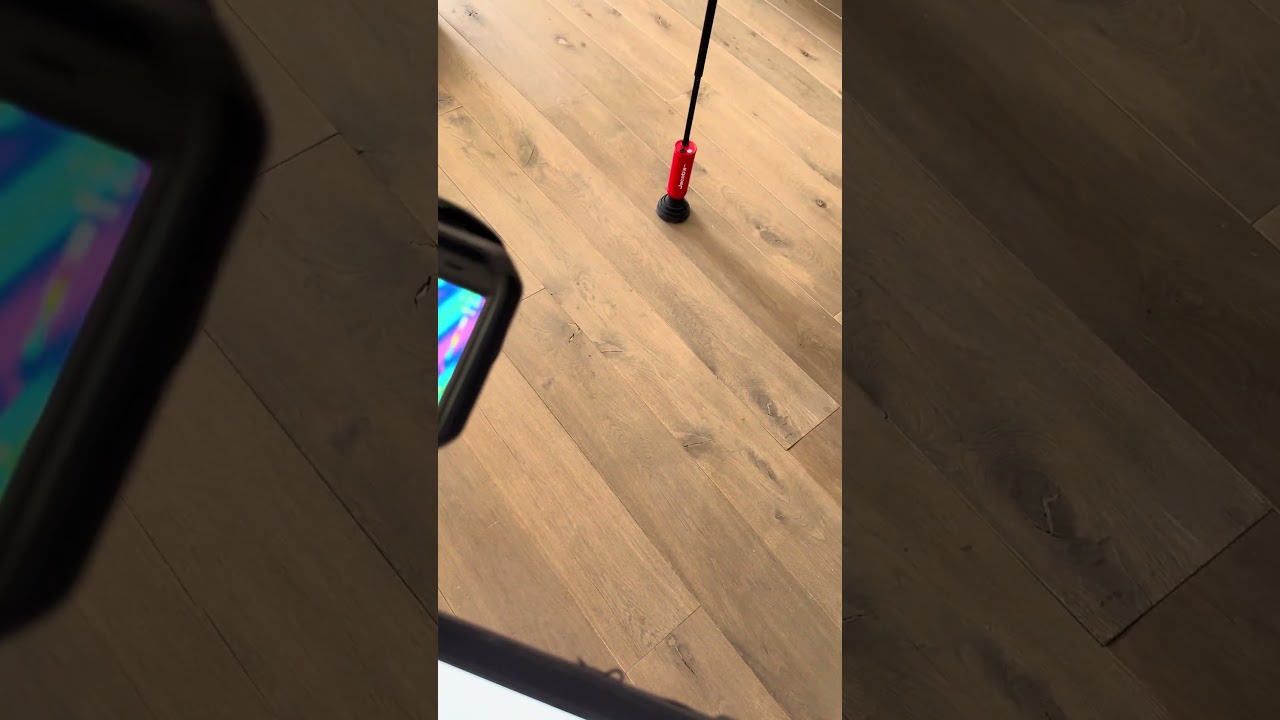
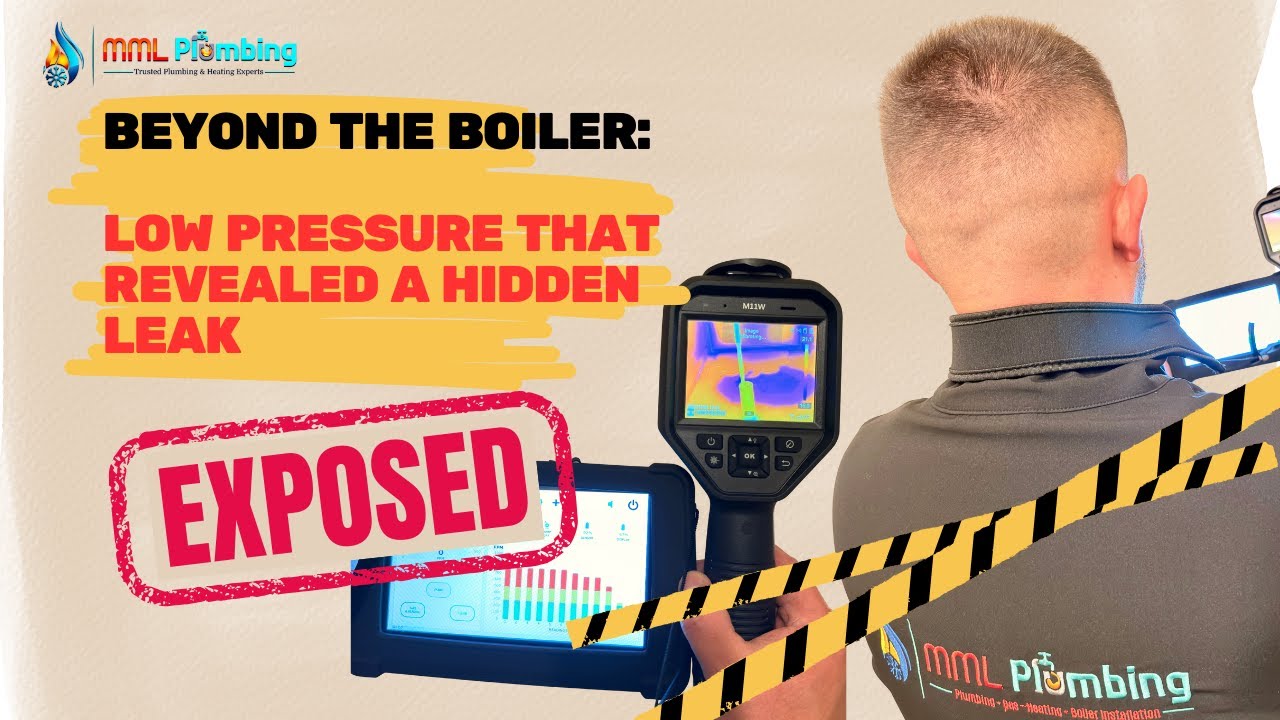
Case study: Can Hydrogen Tracer Gas Testing Rule Out a Hidden Heating Leak When a Radiator Stays Cold?
During our central heating leak detection and system investigation in North London N11, a homeowner was concerned about poor heating performance, including a living room radiator that remained cold while other radiators heated unevenly.
Our engineers used thermal imaging and hydrogen tracer gas testing to investigate whether concealed heating pipework was leaking. The tracer gas investigation found no evidence of an active leak, while thermal imaging revealed circulation problems and uneven radiator temperatures.
Further checks identified fully open lockshield valves contributing to poor system balancing, alongside signs of sludge accumulation. We flushed the affected radiator and adjusted the lockshield valves to improve circulation. Following these adjustments, the radiator reached approximately 64°C at the top and 56°C at the bottom.
Why this matters: A cold radiator or poorly performing heating system does not automatically indicate a hidden pipe leak. Combining hydrogen tracer gas testing with thermal imaging and heating system checks can help distinguish water loss from circulation, balancing and sludge-related problems, avoiding unnecessary excavation or pipe replacement.
Book an Underfloor Heating Leak Detection Survey in London
Is your underfloor heating losing pressure, leaving cold spots or causing unexplained damp patches beneath your flooring?
At MML Plumbing, our specialist engineers investigate concealed wet underfloor heating leaks across London using pressure testing, thermal imaging, hydrogen tracer gas, acoustic detection and moisture mapping where appropriate. We aim to establish the source of water loss before unnecessary tiles, wooden flooring or screed are removed.
Our domestic leak detection investigations start at £550 + VAT, including the call-out and an insurance-ready photographic report. More complex underfloor heating systems are quoted according to the investigation required.
Whether the problem involves a leaking heating loop, manifold connection or another wet-side heating component, we provide evidence-based findings and clear recommendations for access and repair.
Call us or book your underfloor heating leak detection investigation online.

We Find the Leak Before It Finds You – Book Expert Detection Today
Frequently Asked Questions About Underfloor Heating Leaks
Frequently Asked Questions
Question not answered? Ask A Question
Why Does My Underfloor Heating Pressure Keep Dropping When There Is No Visible Leak?
Repeated pressure loss may indicate a leaking underfloor heating pipe, but it can also result from a faulty expansion vessel, pressure relief valve, automatic air vent, manifold connection or another component in the connected heating system.
Water escaping beneath screed may remain concealed for some time, particularly where the floor construction absorbs or redirects moisture.
A professional investigation can involve assessing the accessible heating components, isolating suitable circuits and carrying out pressure testing.
If the evidence indicates that a particular heating loop is losing water, thermal imaging, acoustic testing or hydrogen tracer gas may help narrow down the suspected defect.
The important first step is to establish whether the pressure loss is caused by the buried pipework or another part of the system. Removing flooring before this has been assessed can result in unnecessary damage and expense.
How Do Engineers Find an Underfloor Heating Leak Beneath Screed, Tiles or Concrete?
Our engineers begin by assessing the heating system, manifold and reported symptoms. Where appropriate, individual heating circuits can be isolated and pressure tested to establish whether a particular loop is losing water.
Thermal imaging may help identify the pipe layout or unusual surface temperature patterns. Acoustic equipment can provide evidence of escaping water in suitable conditions, while hydrogen tracer gas may help investigate defects that cannot be located using other methods.
Moisture mapping can also establish the distribution of dampness across the affected floor.
These methods are complementary rather than interchangeable. Their effectiveness depends on the leak characteristics, pipe material, system pressure and floor construction.
Where the findings support a suspected location, we can recommend targeted access. Some defects still require physical opening-up for confirmation and repair.
Is Hydrogen Tracer Gas the Best Method for Finding an Underfloor Heating Leak?
Hydrogen tracer gas is a valuable method for investigating certain concealed underfloor heating leaks, particularly where conventional acoustic or thermal testing provides insufficient evidence.
Under suitable conditions, the affected heating circuit can be isolated and prepared for tracer gas testing. Specialist sensors are then used to investigate gas escaping from the suspected defect.
However, tracer gas is not automatically the best method for every underfloor heating system.
Gas movement through screed, cracks, joints and surrounding materials can affect the detected location. System accessibility and preparation requirements also influence whether the method is appropriate.
We select the investigation method according to the evidence and may combine tracer gas with pressure testing, thermal imaging or moisture mapping to reach a more reliable conclusion.

