


No guessing. No damage. Just clear answers.
Is thermal imaging dangerous inside a home?
No. Thermal imaging is safe when used correctly.
A thermal imaging camera does not introduce radiation into the building. It detects infrared energy that is naturally emitted by objects based on temperature. There is no physical contact with pipework, wiring or structural elements during the scanning process.
The inspection is observational, not invasive.

Does a thermal camera emit radiation?
No.
Thermal cameras detect infrared radiation; they do not produce or project it. Every object emits infrared energy depending on its temperature. The camera converts that energy into a visual heat map, known as a thermogram.
There is no harmful electromagnetic exposure to occupants during a professional leak detection inspection.
Can thermal imaging damage walls or floors?
No.
Thermal imaging is a non-destructive testing method. Surfaces such as walls, ceilings and floors are scanned to identify abnormal temperature differences caused by leaking water or moisture accumulation.
There is no drilling, cutting or removal of materials during the detection phase. Any trace and access recommendation is made only after findings are verified and documented.

Is thermal detection safe around an electrical system?
Yes, when carried out by qualified professionals.
Thermal imaging is widely used to identify overheating electrical components and potential fire risks. However, interpretation requires expertise. A thermal camera shows temperature variation, not the root cause.
Professional engineers understand how to assess thermal patterns safely without interfering with electrical systems.
Is thermal imaging reliable for detecting water leaks?
Thermal imaging is highly effective, particularly for:
- Hot water pipe leaks
- Central heating leaks
- Underfloor heating systems
Temperature contrast makes these systems easier to assess.
However, there are limitations:
- Cold water leaks may not create strong thermal variation.
- Environmental conditions can influence readings.
- Thermal cameras detect temperature differences, not water directly.
For this reason, professional leak detection combines thermal imaging with moisture meters, tracer gas testing or acoustic leak detection to confirm findings before any repair work begins.
Diagnose → Prove → Document → Then repair.
Can homeowners use a thermal camera themselves?
Entry-level thermal cameras are available to homeowners, but interpretation is frequently misunderstood.
Common misconceptions include:
- Believing thermal cameras can see through walls
- Confusing insulation gaps with active leaks
- Misreading cold spots as pipe defects
Thermal imagers only show surface temperature variation. Without structured testing and moisture verification, misdiagnosis can lead to unnecessary repairs and increased cost.
For concealed leaks, boiler pressure loss or insurance-related claims, a specialist investigation is strongly recommended.


When is thermal imaging most effective?
Thermal imaging works best when:
- Heating or hot water systems are operating
- A clear temperature contrast exists
- Environmental conditions are stable
Evening or overcast inspections can improve accuracy, as direct sunlight may affect surface readings.
In many London properties with concrete floor slabs or underfloor heating systems, high-resolution thermal imaging allows large areas to be scanned efficiently without disruption.
Does thermal imaging provide documentation for insurance claims?
Yes.
A professional thermal imaging survey can include:
- High-resolution thermal images
- Moisture verification readings
- Structured written findings
- Clear diagnostic conclusions
At MML Plumbing, leak detection specialists in London provide insurance-approved reporting suitable for trace and access processes and building insurance claims.

When should I arrange a thermal imaging leak detection survey?
You should consider thermal imaging in London if you notice:
- Unexplained boiler pressure loss
- Warm or cold floor patches
- Damp ceilings beneath bathrooms
- Mould growth without visible pipe damage
- Rising water meter readings
- Hidden moisture with no clear source
Early detection reduces structural damage, limits mould growth and prevents escalating repair costs.
Summary
Thermal imaging is safe for home use because it passively detects infrared heat differences without emitting radiation.
It is a non-invasive method that does not damage walls or floors.
It detects temperature changes, not water itself.
Professional leak detection combines thermal imaging with moisture verification for accurate diagnosis.
Structured reporting provides insurance-ready evidence before repairs begin.
Find out more about thermal imaging leak detection on our faq page.
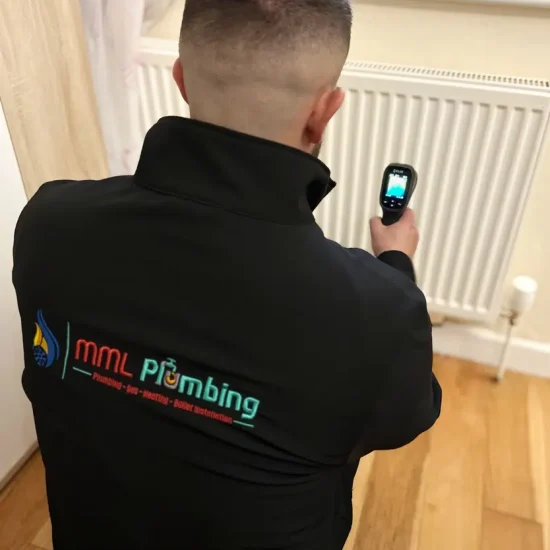
Real Leak Detection Examples From North London Homes





We Find the Leak Before It Finds You – Book Expert Detection Today
If you suspect a concealed water leak in your London property, MML Plumbing can carry out a structured, non-invasive thermal imaging inspection combined with moisture verification and advanced testing where required.
Call to arrange a professional diagnostic survey.
Clear evidence first. Informed repair decisions second.

