
A plumbing system does not need replacing simply because a property is old. The more useful question is whether the existing pipework, valves and fixtures are still reliable, suitable for the way the house is used and economical to maintain.
Repeated leaks, deteriorating pipework, poor water flow and ageing fixtures can indicate that continuing with individual repairs is becoming less practical. In other homes, most of the plumbing may still be serviceable and only particular sections need improving.
The purpose of plumbing upgrades should therefore be to correct an identified weakness, improve reliability or prepare the property for changing demands — not to replace working pipework unnecessarily.
Here are five signs that it may be time to assess whether targeted plumbing improvements would make more sense than another isolated repair.
1. You are repeatedly repairing different parts of the plumbing system
One leaking valve or failed tap does not mean the whole plumbing system is deteriorating. Plumbing components wear out, and individual faults are normal over the life of a property.
The situation becomes more significant when problems keep appearing in different parts of the same system.
You might repair one leaking pipe connection, then discover another leak several months later. Isolation valves may begin to seize or pass water when closed. Older fittings may need repeated attention, or sections of pipework may show increasing signs of deterioration.
The pattern matters more than one repair.
Repeated faults can indicate that components installed at a similar time are ageing together, that previous alterations were poorly executed, or that a particular section of pipework is becoming unreliable.
Before deciding on extensive replacement, establish what is actually failing. Sometimes replacing one deteriorated pipe run or a group of ageing valves is sufficient. In other cases, repeated failures across a wider area may justify a more substantial upgrade.
Keeping records of previous plumbing repairs can be useful. If several repairs are being carried out on related pipework, the history helps determine whether continued individual repairs remain sensible.
2. Water flow or pressure has noticeably deteriorated
A noticeable decline in water delivery deserves investigation, particularly when it affects several outlets rather than one tap or shower.
The first distinction is between pressure and flow. They are related, but they are not the same measurement. A property can have reasonable static pressure but still experience poor flow when several outlets are opened.
Weak water delivery can have several causes, including a partially closed or failing stopcock, restrictions within valves or fittings, unsuitable pipe sizing, limescale, deterioration within older pipework, a problem with the incoming supply or, in some circumstances, water escaping from the system.
That means low flow should not automatically result in a new pump or wholesale pipe replacement.
Start by establishing where the problem occurs. If only one shower has weak flow while the rest of the property performs normally, the problem may be local to that shower or its supplies. If several outlets are affected, investigation can move further back through the system.
Where necessary, flow and pressure measurements can help establish whether the restriction is within the property’s cold-water plumbing system or whether another explanation needs to be considered.
An upgrade makes sense when testing identifies an existing part of the plumbing arrangement that is restricting performance and replacement or alteration provides a genuine improvement.

3. Pipework is showing corrosion, deterioration or repeated leakage
Visible deterioration should not be ignored.
Signs can include corrosion around exposed pipework or joints, staining around connections, repeated seepage, deteriorating valves or evidence that sections of the system have been repaired numerous times.
Discoloured water can also justify investigation, but its cause should not be assumed. The incoming water supply, internal pipework and hot-water system can produce different symptoms. Brown or rusty-looking water does not, by itself, identify which component is responsible.
Older properties may also contain a mixture of pipe materials installed during different renovations. Some original pipework may have been replaced while other sections remain concealed beneath floors or inside walls.
The age of a pipe is therefore not enough to decide whether it should be replaced.
Condition, material, accessibility, previous failures and evidence of leakage are more useful considerations.
If there is concern about obsolete pipe materials or the condition of the incoming water supply, the existing arrangement should be identified before deciding what needs changing. Targeted replacement is often preferable to removing serviceable pipework simply because it is old.
Where unexplained water loss suggests a concealed fault rather than visible deterioration, establish the source before opening walls or floors. A professional leak detection investigation can help determine whether water is actually escaping from concealed plumbing and narrow the area requiring attention.
4. Old fixtures no longer suit the way the house is used
Not every worthwhile plumbing upgrade involves replacing pipes.
Older taps, toilets, showers, valves and other plumbing fixtures may still function but perform poorly compared with suitable modern alternatives. They may use more water, provide poor control, be difficult to isolate or require components that are increasingly difficult to maintain.
Replacing an old fixture can therefore be worthwhile when there is a clear functional benefit.
Modern taps can improve usability and update a kitchen or bathroom without requiring the entire room to be renovated. Appropriate water-efficient toilets and shower fittings can reduce unnecessary water use. Lower-flow shower heads can reduce water consumption, although the correct product needs to remain compatible with the property’s existing water supply and hot-water arrangement.
Efficiency should not simply mean restricting water as much as possible. A fixture that performs poorly is not an improvement merely because it uses less water.
The objective is to select fittings that provide suitable performance while avoiding unnecessary consumption.
This is particularly relevant during a bathroom or kitchen renovation. When fittings are already being replaced, and parts of the plumbing are accessible, it can be sensible to assess ageing valves, connections and pipework before new finishes are installed.
That can avoid completing an expensive room around plumbing that was already known to require attention.
5. The existing plumbing no longer matches the demands placed on the property
Properties change even when the original plumbing does not.
A house may gain an additional bathroom, en-suite, larger shower, utility room or different kitchen arrangement. A property may be converted into flats, extended or occupied by more people than when the original plumbing was installed.
Each change can alter demand on the water system.
This does not mean every renovation requires completely new plumbing. It means the existing arrangement should be assessed rather than assuming it will automatically support additional fixtures.
Pipe sizing, available flow, hot-water provision, isolation arrangements and the simultaneous use of outlets can all affect performance.
This is especially important before choosing high-demand bathroom fittings. Buying a large shower or additional bathroom equipment before understanding the existing water supply can result in disappointing performance even when the new fittings themselves are working correctly.
Plumbing improvements should therefore be planned around the actual system and expected demand rather than around individual products alone.
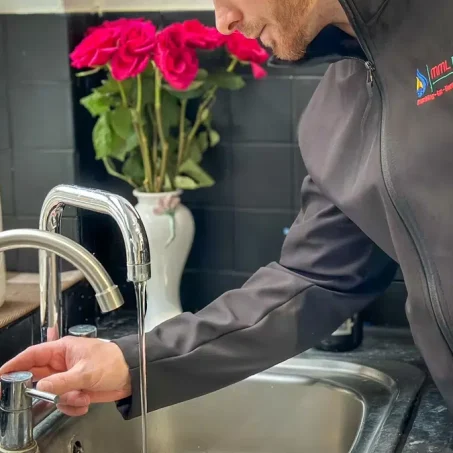
Does an old house automatically need new plumbing?
No.
Older houses frequently contain plumbing installed during several different periods. Some sections may have been renewed during previous bathroom or kitchen renovations while other pipework may be considerably older.
Replacing everything solely because of the property’s age can create substantial unnecessary work.
Instead, assess the evidence.
Consider whether there are repeated leaks, visible corrosion, poor flow, unsuitable pipe materials, inaccessible or ineffective isolation valves, previous temporary repairs or known problems with the existing layout.
A well-performing older section of pipework does not necessarily need replacement simply to make the system newer.
Equally, repeated repairs should not automatically continue indefinitely when evidence shows that a larger section is deteriorating.
The decision should be based on condition and performance.
Should you upgrade the whole plumbing system or only part of it?
Many plumbing upgrades can be completed in stages.
For example, a renovation may provide an opportunity to renew the supplies serving one bathroom while leaving serviceable pipework elsewhere untouched. A deteriorated section of cold-water pipework may be replaced without changing the entire system. Old isolation valves can be upgraded independently of the fixtures they control.
A full replacement becomes more reasonable when deterioration is widespread, numerous sections have already failed, the existing arrangement is unsuitable for the property’s requirements, or planned renovation will expose enough of the system to make broader replacement practical.
Accessibility matters as well.
Replacing pipework while floors and walls are already open during planned building work can be considerably less disruptive than returning to the same concealed pipes after the property has been decorated.
This is why plumbing upgrades are best considered as a scope decision, rather than an automatic choice between doing nothing and replacing everything.
Can plumbing upgrades save you money?
They can, but the savings depend on what is being improved.
Repairing active leaks prevents continued water loss. Replacing inefficient fixtures with appropriate water-efficient alternatives can reduce consumption. Correcting a restriction or defective component may restore performance without requiring more expensive equipment.
Planned replacement can also reduce the likelihood of repeatedly paying to repair components that are demonstrably deteriorating.
However, replacing working plumbing does not automatically produce a financial return. The cost of the work, condition of the existing system, expected period of ownership and reason for upgrading all matter.
The strongest case for an upgrade is usually an identifiable problem or planned change that the improvement actually solves.
What should be checked before deciding to upgrade your plumbing?
A useful assessment starts with the existing system rather than a shopping list of new products.
Depending on the problem and the areas being considered, relevant checks may include accessible pipe materials and condition, signs of previous leakage, isolation valves, water flow and pressure, the arrangement of supplies, existing fixtures and evidence of previous alterations.
The purpose is to distinguish between three situations:
a component that needs repairing, a section that would benefit from upgrading, and a wider system that genuinely requires more extensive replacement.
That distinction can prevent both under-repairing a deteriorating system and unnecessarily replacing plumbing that is still performing correctly.
If you are planning substantial alterations to a property, a broader assessment can also help identify work that is sensible to complete while pipework is accessible.
What about the central heating system?
The water side of a central heating system should be considered separately from the domestic hot- and cold-water supply.
Radiator pipework, valves, circulation and sealed-system pressure have different functions from the water serving taps, toilets and showers.
Repeated pressure loss, leaking radiator valves, corroded radiators or poorly performing heating circuits can justify investigation, but they do not automatically mean the domestic plumbing system needs upgrading.
Likewise, low flow from a tap should not be confused with pressure loss from a sealed central heating system.
Keeping those systems diagnostically separate helps avoid replacing the wrong components.
The water side of a central heating system should be considered separately from the domestic hot- and cold-water supply.
Radiator pipework, valves, circulation and sealed-system pressure have different functions from the water serving taps, toilets and showers.
Repeated pressure loss, leaking radiator valves, corroded radiators or poorly performing heating circuits can justify investigation, but they do not automatically mean the domestic plumbing system needs upgrading.
Likewise, low flow from a tap should not be confused with pressure loss from a sealed central heating system. If the heating system repeatedly loses pressure, it is important to understand whether repeatedly topping up the boiler can cause long-term damage rather than treating regular refilling as a permanent solution.
Keeping those systems diagnostically separate helps avoid replacing the wrong components.
Can upgrading plumbing improve a home’s value?
Plumbing improvements can improve the condition, efficiency, functionality and presentation of a house, all of which may matter to potential buyers. Modern fixtures, properly installed bathrooms and evidence that known plumbing defects have been addressed can also provide greater confidence than obvious leaks or neglected pipework.
However, an upgrade should not be presented as guaranteeing a particular increase in property value. The effect depends on the property, the work completed, its quality and the local housing market.
That is also a different decision from determining whether an existing plumbing system actually needs upgrading.
If your main reason for considering the work is an upcoming sale or renovation rather than recurring plumbing faults, read our guide to whether plumbing upgrades can add value to your home.

When is the best time to carry out plumbing improvements?
The most practical opportunity is often when related areas of the property are already being renovated.
If a bathroom is being stripped out, for example, previously concealed supplies may become accessible. If a kitchen layout is changing, pipe routes and isolation can be reconsidered before new cabinets and finishes cover them again.
That does not mean every exposed pipe should automatically be replaced. It means accessibility creates an opportunity to inspect the condition and suitability of pipework that may otherwise remain concealed for many years.
Planned work can also be prioritised.
Safety or active leakage comes first. Known deteriorating pipework and reliability problems generally deserve attention before cosmetic improvements. Efficiency or fixture upgrades can then be considered according to the property’s requirements and budget.
Repair, upgrade or investigate first?
The correct next step depends on what you already know.
If an accessible component has failed and the cause is clear, a repair may be all that is required.
If repeated failures show that a section of the plumbing is deteriorating, upgrading that section may provide a more durable solution than continuing with isolated repairs.
If you know there is a problem but do not know its cause — for example, unexplained water loss, recurring damp or water appearing away from visible pipework — investigation should come before deciding what needs replacing.
MML Plumbing Ltd carries out plumbing repairs, plumbing improvements and non-invasive leak investigation across North London. Tell us what is happening, what has previously been repaired and whether you are planning other renovation work. We can establish whether the appropriate next step is a repair, a targeted upgrade or further investigation.
The key principle is simple: upgrade plumbing because there is evidence that an improvement is needed, not simply because the system is old.
How we found hidden water leaks without damaging your home



Buying a Home? Know What Plumbing Repairs You May Face
Get a clearer picture of the property’s plumbing before you commit. MML Plumbing can assess accessible systems, explain any concerns we find, and help you plan your next steps. Request a pre-purchase plumbing survey quote.
FAQ
Question not answered? Ask A Question by email
How do I know if old plumbing needs replacing or can still be repaired?
Age alone does not determine whether pipework needs replacing. Consider its material, visible condition, history of leakage, previous repairs and current performance. One failed joint may justify a local repair, while repeated leaks from different parts of the same ageing pipework can provide stronger evidence that targeted replacement should be considered. Where the condition of concealed pipework is uncertain, establish what can reasonably be inspected or tested before committing to extensive replacement.
Is low water pressure a sign that I need to replace my plumbing pipes?
Not necessarily. Weak water delivery can result from restrictions, valves, individual fixtures, limescale, pipe sizing, the incoming supply or other faults. First, determine whether the problem affects one outlet, several outlets or the whole property. Appropriate flow and pressure checks can then help narrow the cause. Pipe replacement makes sense when the investigation shows that the existing pipework is actually responsible for the restriction.
Should I replace old plumbing while renovating my bathroom or kitchen?
A renovation is a useful opportunity to assess plumbing because pipework that is normally concealed may already be accessible. Check its condition, material, layout, isolation arrangements and suitability for the new fittings before walls, floors and units are finished. Serviceable pipework does not need replacing simply because it is exposed, but known deterioration or unsuitable arrangements are generally easier to address while the area is already open.
Are repeated plumbing leaks a sign that the whole system needs upgrading?
Repeated leaks deserve closer assessment, but they do not automatically mean the whole house needs repiping. Establish whether the failures involve one defective component, one particular pipe run or unrelated parts of a wider ageing system. If several failures involve similar pipework or components, targeted replacement may become more economical and reliable than continuing with isolated repairs. The scope should follow the evidence rather than assuming either a small repair or complete replacement from the outset.


