


Over 15 years of experience
How Much Does Tap Installation Cost in London?
The cost of tap installation depends on whether you are replacing an existing tap, upgrading to a different model or installing a tap in a new location.
For a straightforward replacement, the original guide’s indicative labour range is £115–£250, excluding the cost of the new tap and any additional materials.
However, not every plumbing job can be completed for the same price.
A kitchen tap replacement may be straightforward when the connections are accessible, and the isolation valves work correctly. The same job can become more involved if the old tap is seized, the pipework is corroded, or the plumber needs to modify the connections.
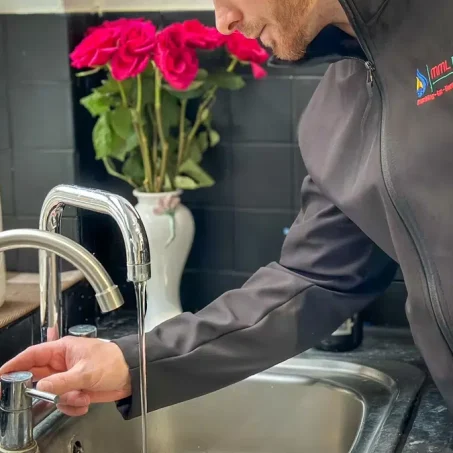
Here’s a breakdown of the labour costs for different types of tap installations
- Replacing sink taps: £112.5–£250 (plus VAT if applicable)
- Replacing basin taps: £112.5–£250 (plus VAT if applicable)
- Replacing a mixer tap: £112.5–£250 (plus VAT if applicable)
- Replacing a bath tap: £112.5–£250 (plus VAT if applicable)
- Replacing a kitchen tap: Costs may vary (plus VAT if applicable)
(excluding materials)
When hiring a professional plumber, it’s crucial to ensure that the selected tap is suitable for your sink or garden. While smaller tap installations typically do not involve free estimates, you can rely on the expertise of a qualified plumber to select the correct-sized tap.
Indicative London Tap Replacement Costs
| Type of Work | Indicative Labour Cost | What Affects the Price? |
|---|---|---|
| Kitchen tap replacement | £115–£250 | Access beneath the sink, fittings and condition of the old tap |
| Kitchen mixer tap replacement | £115–£250 | Tap mounting, flexible hoses and isolation valves |
| Bathroom basin tap replacement | £115–£250 | Pedestal access, pipe connections and tap configuration |
| Bath taps replacement | £115–£250 | Bath panel access and restricted working space |
| Standard mixer tap replacement | £115–£250 | Existing connections and compatibility |
| Tap installation in a new position | Individually quoted | Additional pipework, drilling and alterations |
These are illustrative labour estimates carried forward from the previous article, not verified current market averages or MML Plumbing's live prices. VAT, materials, parking and other charges may be additional.
The cost to replace a tap can vary significantly between properties. The most useful comparison is a quotation describing the exact work rather than an advertised minimum price.
What Is Included in the Cost of Changing a Tap?
For a standard replacement, the plumber will normally need to isolate the water supply, disconnect the existing tap, remove it, install the new tap and test the connections.
A typical tap replacement involves several stages.
1. Checking the existing tap
Before removing the old tap, the plumber assesses its mounting arrangement, connection sizes and available access.
This helps determine whether the replacement tap is compatible with the existing sink or basin.
2. Isolating the water supply
The plumber checks whether isolation valves are present and functioning.
Where suitable isolation valves are available, it may be possible to shut off the hot and cold water locally without interrupting the whole property.
If the isolation valves are defective or missing, additional work may be necessary.
3. Removing the old tap
The existing tap is disconnected from the water supply.
Seized mounting nuts, corroded connections and restricted access can increase the time required.
4. Installing the new tap
The plumber fits the new tap, secures the mounting and connects the hot and cold supplies using suitable fittings.
Any supplied flexible hoses must be appropriate for the installation.
5. Testing for leaks
Once the water supply is restored, the connections are checked for leakage.
The plumber should also check operation, flow and any visible movement around the tap base.
These steps explain why the total cost involves more than simply tightening a replacement fitting.
Kitchen Tap Replacement Cost in London
A kitchen tap is one of the most frequently used plumbing fixtures in a property.
Kitchen taps may develop dripping spouts, stiff handles, leaking connections or damaged internal cartridges.
The cost of replacing a kitchen tap depends largely on access beneath the kitchen sink and the compatibility of the new fitting.
Standard kitchen mixer tap replacement
A standard kitchen mixer tap combines hot and cold water through one spout.
Replacing an existing kitchen mixer tap is often straightforward when the new tap fits the same mounting hole, and the water connections are compatible.
However, restricted space behind a deep kitchen sink can make removal difficult.
What increases kitchen tap replacement costs?
The main complications include:
- A seized or corroded old tap
- Limited access behind the kitchen sink
- Damaged flexible hoses
- Missing or defective isolation valves
- Incompatible connection sizes
- A new tap requiring a different mounting arrangement
- Corroded pipework beneath the sink
The final cost may increase if these issues require additional materials or labour.
Does a pull-out kitchen mixer cost more to install?
A pull-out kitchen mixer tap may have additional hoses and a retractable spray mechanism.
The installation can require more space and careful positioning beneath the sink.
If the existing connections and mounting arrangement are suitable, the labour difference may be small.
However, a complicated replacement may take longer than fitting a standard chrome mixer tap.
Is it cheaper to replace a kitchen tap in the same position?
Generally, yes.
When the new tap uses the same position and compatible connections, there is usually less alteration work.
Moving the kitchen tap to a new location may require changes to the water supply pipes, worktop or sink.
This is why replacing an existing tap is normally more predictable than a complete kitchen plumbing alteration.
Bathroom Tap Replacement Cost
Bathroom taps come in several configurations, and the type of fitting affects installation time.
A plumber may need to replace basin taps, bath taps or a bathroom mixer tap.
Basin taps
Traditional basin taps may have separate hot and cold controls.
Replacing these fittings can be relatively straightforward when the connections are accessible.
However, pedestal basins and vanity furniture can restrict access to mounting nuts.
Bathroom mixer taps
A bathroom mixer tap combines hot and cold water through one outlet.
The plumber needs to check that the replacement fitting is compatible with the basin and the existing water supply.
If the new tap requires different connections, the materials needed may increase the cost.
Bath taps
Bath taps can be more difficult to access than basin taps.
The plumber may need to remove a bath panel or work through a narrow access opening.
Where taps are positioned against a wall, access to the mounting and pipe connections may be particularly restricted.
The total cost depends on whether the existing bath taps can be removed without disturbing surrounding finishes.
Can separate hot and cold taps be replaced with a mixer tap?
Sometimes, but it is not always a direct replacement.
The basin or bath must have a suitable mounting arrangement.
Changing from separate hot and cold taps to a mixer tap may require a different basin, bath fitting or pipe connections.
The plumber should check compatibility before the customer purchases the replacement.
What Factors Affect the Cost of Tap Installation?
Several factors determine how much plumbers charge for changing taps in London.
Understanding these factors can help you compare quotations and avoid unexpected costs.
1. Type of tap
A basic basin tap, kitchen mixer tap or bath mixer may require different fittings and installation time.
The design and mounting arrangement can influence the labour cost.
2. Condition of the old tap
An old tap that has been fitted for many years may be difficult to remove.
Corrosion, limescale and seized fixings can turn a simple replacement into a longer job.
3. Isolation valves
Isolation valves allow individual water supplies to be shut off for maintenance.
If suitable isolation valves are present and working, the plumber can often isolate the relevant fixture more conveniently.
If no isolation valves are present, the main stopcock may need to be used.
Where the existing valves are leaking or defective, replacing them may add to the installation cost.
4. Existing pipework
The condition of the existing pipework is important.
Old connections may be incompatible with the new tap, while corroded fittings can create additional work.
The plumber may need to replace short pipe sections, connectors or flexible hoses.
5. Location of the tap
A tap fitted to an accessible basin may be easier to replace than one positioned behind a large sink or beneath a worktop.
The job takes longer when the plumber has restricted access to the connections.
6. Materials needed
Additional connectors, isolation valves, hoses or mounting components can increase the cost.
The quotation should clarify whether these materials are included.
7. London parking and congestion charges
Parking costs and applicable congestion charges may affect the final cost.
These expenses vary depending on the property location and the arrangements for the visit.
8. Labour charging structure
Some plumbers charge a fixed price for common plumbing jobs.
Others use an hourly rate, a minimum labour charge or a call-out fee.
The cheapest advertised hourly rate does not necessarily produce the lowest total cost.
The quotation should explain how the work will be charged.

How Much Does a New Tap Cost?
The purchase price of new taps varies considerably.
A basic replacement tap may cost around £30–£100 or more, while premium kitchen taps, designer bathroom taps and specialist fittings can cost substantially more.
The price of the tap is separate from the plumber’s installation labour unless the quotation specifically includes supply.
Standard chrome mixer tap
A standard chrome mixer tap is often a practical replacement for a conventional kitchen or bathroom fitting.
However, the cheapest model is not necessarily the best value.
Check the manufacturer’s warranty, cartridge quality, connection requirements and suitability for the property’s water pressure.
Kitchen mixer tap
A kitchen mixer may include a swivel spout, pull-out spray or additional functions.
These features can increase the purchase price.
Before ordering a kitchen mixer, check the available mounting space and whether the supplied connections are compatible.
Bathroom taps
Bathroom taps may include separate pillar taps, monobloc mixers or wall-mounted designs.
Wall-mounted taps can require more complex pipe arrangements than conventional deck-mounted fittings.
Can buying the tap yourself save money?
Purchasing the new tap yourself may help control the materials budget.
However, you should confirm the model is suitable before ordering.
An incompatible tap can create extra cost, delay the work or require additional parts.
It is worth checking the manufacturer’s pressure requirements, particularly in properties supplied by a gravity-fed system or a standard hot water tank.
How Long Does It Take a Plumber to Replace a Tap?
A straightforward replacement may take approximately one to two hours, depending on the installation.
Some jobs can take around an hour, while difficult access or corroded fittings can extend the visit.
The time required is not determined solely by whether the fitting is a kitchen tap or bathroom tap.
When can a replacement be completed quickly?
A simple job is more likely when:
- The new tap fits the existing mounting
- The old tap can be removed easily
- Suitable isolation valves are present
- The pipe connections are compatible
- No additional repairs are needed

Why might the job take longer?
The job takes longer when the plumber must remove seized fixings, replace defective valves or alter pipe connections.
A new location may require drilling and additional plumbing alterations.
The total cost can therefore increase even if the new tap itself is inexpensive.
Is It Cheaper to Repair a Dripping Tap or Replace It?
A dripping tap does not always need complete replacement.
Some faults can be repaired by replacing a cartridge, washer or other serviceable component.
The decision depends on the tap’s age, condition and availability of replacement parts.
When is repair worth considering?
Repair may be economical when the tap body is in good condition, and the required part is available.
A cartridge replacement can sometimes restore normal operation without replacing the entire fitting.
When should you replace the tap?
Tap replacement may be more appropriate when:
- The tap body is corroded
- Internal components are no longer available
- The handles are badly damaged
- The tap repeatedly leaks after repair
- The existing fitting is unsuitable for the property
- The customer wants to upgrade the design or functionality
Can a dripping tap increase water costs?
Yes.
A continuously dripping tap wastes water and can increase consumption over time.
The amount depends on the drip rate and how long the problem continues.
Replacing a defective fitting or carrying out an appropriate repair can help prevent unnecessary water loss.
For the actual repair and installation service, see tap repair and installation in London.
Signs That Your Tap May Need Replacing
There are several signs that a tap requires attention.
Not all of them mean the entire tap must be replaced, but they justify an inspection.
Persistent dripping
A dripping tap may have a worn cartridge, washer or damaged internal sealing component.
If replacement parts are unavailable or the tap is deteriorating, a new fitting may be more economical.
Stiff or difficult handles
Handles can become difficult to operate because of limescale, corrosion or internal wear.
The problem may be repairable, depending on the tap design.
Leakage around the base
Water around the tap base may indicate a loose mounting, failed seal or leaking connection.
The source should be checked before replacing the fitting.
Unusual noises
Noisy taps and hammering sounds can be associated with water pressure, flow restrictions or movement in the pipework.
These symptoms do not automatically mean the tap needs replacement.
The underlying cause should be assessed.
Visible corrosion
Severe corrosion can make an old tap difficult to repair or remove.
Replacement may be the more practical option if the fitting has deteriorated significantly.

What Is the Cost of Removing an Old Tap?
The cost of removing an old tap is normally included in a straightforward tap replacement quotation, but this should be confirmed.
Removal can be more time-consuming when the mounting nuts are seized, or the surrounding pipework is fragile.
Can you remove a tap yourself?
A homeowner with suitable plumbing experience may be able to remove a tap after correctly isolating the water supply.
However, incorrect isolation or damaged connections can cause water leakage.
If the shut-off arrangements are uncertain, professional assistance is advisable.
What happens to the old taps?
Ask whether waste disposal is included in the quotation.
Old taps and metal fittings may be suitable for recycling.
Depending on local arrangements, unwanted fittings can be taken to an appropriate recycling centre.
If the plumber is removing waste from the property, the disposal arrangements and any extra cost should be agreed in advance.
DIY Tap Replacement vs Hiring a Professional Plumber
Replacing a tap can appear to be one of the smaller plumbing jobs.
However, the work involves the water supply, mechanical connections and watertight sealing.
When might DIY replacement be practical?
A straightforward replacement may be manageable for someone with the correct tools, suitable experience and reliable water isolation.
The new tap must be compatible with the existing plumbing.
What can go wrong?
Common problems include:
- Damaging a seized connection
- Failing to isolate the water correctly
- Using incompatible fittings
- Overtightening connections
- Incorrectly fitting flexible hoses
- Creating a leak beneath the sink
- Damaging the sink or basin mounting
Why hire a plumber?
A professional plumber can assess the existing tap, check the connections and identify materials needed before completing the work.
This can be particularly useful in older London properties where access and pipe condition are uncertain.
For local tradespeople, clear pricing and a defined scope of work matter more to customers than vague promises of a cheap installation.
Is a Fixed Price Better Than an Hourly Rate?
Both charging methods can be reasonable.
The best option depends on how predictable the plumbing job is.
Fixed-price tap replacement
A fixed price can make the expected cost clearer when the scope of work is known.
However, the quotation should specify what happens if concealed defects or damaged fittings are discovered.
Hourly rate
An hourly rate may be appropriate when the condition of the installation is uncertain.
The customer should establish the minimum charge, how additional time is calculated and whether materials are included.
What about a call-out fee?
Some plumbers charge a call-out fee or minimum attendance charge.
Others include attendance within their quoted labour cost.
Before booking, ask exactly what is included rather than assuming that all plumbers charge in the same way.
How can you compare quotations?
Check whether each quotation includes removal of the old tap, installation of the new fitting, basic testing, VAT, materials and any applicable parking or travel costs.
This provides a more useful comparison than looking only at the advertised price per hour.
Can Other Plumbing Problems Increase the Cost of Replacing a Tap?
Yes.
Sometimes the plumber discovers a separate issue while preparing to install a new tap.
For example, a defective isolation valve may need replacement before the work can be completed safely.
An existing leaking pipe beneath the sink may also require attention.
Defective isolation valves
A valve that does not close properly can prevent local water isolation.
The plumber may need to use the main stopcock or replace the defective valve.
Corroded pipe connections
Older pipework can become damaged during removal of seized fittings.
Additional pipework may be necessary to restore a reliable connection.
Water pressure problems
Low flow from a tap can result from a blocked aerator, faulty cartridge, restricted supply or other plumbing problem.
Replacing the tap without identifying the cause may not resolve the issue.
Central heating and other plumbing systems
Tap replacement is generally separate from central heating system repairs.
However, older properties may have hot water arrangements that affect tap compatibility and performance.
The plumber should consider the supply arrangement when selecting a new fitting.
A burst or leaking pipe elsewhere in the property also requires its own assessment rather than being treated as an ordinary tap replacement.
Where there is evidence of a separate concealed pipe defect, specialist leak detection may be appropriate. A dripping tap alone does not normally justify a concealed leak investigation.
What About Outdoor and Garden Tap Installation Costs?
Installing a new outdoor tap is different from replacing an existing kitchen or bathroom tap.
The work may require a connection to the cold water supply, suitable backflow protection, external pipework and an appropriate wall penetration.
The cost depends on the distance from the water source and the materials needed.
Replacing an existing outdoor tap in the same position is usually a different scope of work from creating a completely new external water point.
For the specific service, see garden tap installation.

How to Keep Tap Replacement Costs Under Control
There are several practical ways to reduce unnecessary expense when arranging a tap replacement.
First, identify whether the existing tap needs repair or complete replacement.
Second, check the replacement model’s dimensions, mounting arrangement and pressure requirements before purchasing it.
Third, provide photographs of the tap and the connections beneath the sink or basin when requesting a quotation.
Fourth, explain whether the tap is dripping, seized, leaking at the base or being replaced for cosmetic reasons.
Finally, ask whether the quotation includes the materials needed, VAT and any additional charges.
The general rule is that a straightforward replacement in the same position is usually more predictable than work involving pipe alterations or a new location.
A clear description of the job can help the plumber assess the likely labour and avoid unnecessary delays.
Final Answer: What Should You Budget to Change a Tap in London?
For planning purposes, the previous guide’s indicative £115–£250 labour range provides a starting point for a straightforward tap replacement in London, but it should not be treated as a confirmed current price.
The total cost depends on the new tap, existing connections, isolation valves, access, materials and whether additional pipework is required.
A kitchen mixer tap or bathroom tap installed in the same position with compatible connections will generally be more predictable than a replacement involving corroded pipework or relocation.
For a property-specific price, MML Plumbing can review the tap type and installation details before confirming the proposed work.

Get an Online Quote for Tap Replacement in London
If you need to replace a kitchen tap, bathroom mixer tap, basin taps or bath taps, MML Plumbing can assess the work required and provide pricing based on the installation details.
When requesting a quotation, include the type of tap, photographs where possible and any known problems with the existing connections.
We can then assess whether the work appears to be a straightforward replacement or whether additional plumbing alterations may be necessary.
Use our online plumbing quotation form to provide the details of your tap replacement.
What people love about us


Transform Your Home with Expert Plumbing and Heating Services!
Frequently Asked Questions About Tap Replacement Costs in London
Question not answered? Ask A Question
How much does it cost for a plumber to change a kitchen mixer tap in London?
The original guide gives an indicative labour range of £115–£250 for straightforward tap replacement work, but this is not a verified current market average.
The cost of changing a kitchen mixer tap depends on the old tap, access beneath the kitchen sink, isolation valves and compatibility of the new fitting.
A standard replacement in the same position may be simpler than installing a different tap design requiring altered connections.
The final cost should be confirmed through a quotation that specifies labour, materials and applicable additional charges.
Is it cheaper to replace a tap or repair a dripping tap?
Repair can be cheaper when the dripping tap only requires a readily available cartridge or washer and the rest of the fitting is in good condition.
Replacement may be more economical when the tap is corroded, parts are unavailable, or the fitting has several defects.
The decision should consider both the immediate repair cost and the expected remaining service life.
Do plumbers charge a call-out fee to replace a tap?
Charging arrangements vary.
Some plumbers use a call-out fee, while others apply a minimum labour charge or quote a fixed price.
The important question is whether the attendance charge is included in the quoted replacement cost.
Ask about VAT, materials and any parking charges before agreeing to the work.
How much extra does it cost if the isolation valves need replacing?
The extra cost depends on the valve type, accessibility, pipe condition and whether the water supply can be isolated safely.
Replacing a defective valve may involve additional labour and materials.
Where isolation valves are present but no longer shut off properly, they should be assessed before disconnecting the tap.
A plumber can confirm the additional cost after reviewing the installation.
How long does it take to replace a kitchen tap?
A straightforward kitchen tap replacement may take approximately one to two hours.
However, the job takes longer when access is restricted, the old tap is seized, or the pipe connections require alteration.
Installing a new kitchen mixer tap may also involve additional work if the replacement has a different mounting or hose arrangement.
The estimated time should reflect the actual installation rather than a fixed assumption.
Can I replace separate bathroom taps with a single mixer tap?
This depends on the basin or bath design.
Separate bathroom taps normally use two mounting positions, while a monobloc mixer may require a single mounting hole.
A direct conversion is not always possible without changing the sanitaryware or using a suitable alternative fitting.
The plumber should check the existing installation before recommending new taps.
Does the plumber supply the new tap?
This depends on the quotation.
Some customers purchase their own new tap, while others ask the plumber to supply the fitting.
If you are buying the tap yourself, confirm its compatibility with the existing sink, mounting arrangement and water supply.
The quotation should clarify whether the new tap and any additional materials are included.
Can a leaking tap cause damage beneath a kitchen sink?
Yes.
A leak at the tap connection or flexible hose can allow water to enter the kitchen cabinet and surrounding materials.
Persistent moisture may damage timber units, flooring and finishes.
The source should be checked rather than assuming that every wet area is caused by the tap itself.
Is it worth replacing old taps before selling a property?
Replacing visibly damaged, dripping, or poorly functioning taps may improve the condition and presentation of a bathroom or kitchen.
However, replacement is not always necessary when the existing fittings operate correctly.
The decision depends on the condition of the taps, the cost and whether the work addresses a genuine defect.
Why do tap replacement prices vary between London plumbers?
Prices vary because of labour charging structures, location, travel, parking, the materials needed and the complexity of the installation.
Some plumbers charge a fixed price for straightforward replacements, while others use an hourly rate.
Older properties and difficult access can increase the time required.
Comparing the full scope of the quotation is more reliable than comparing only the minimum advertised price.

