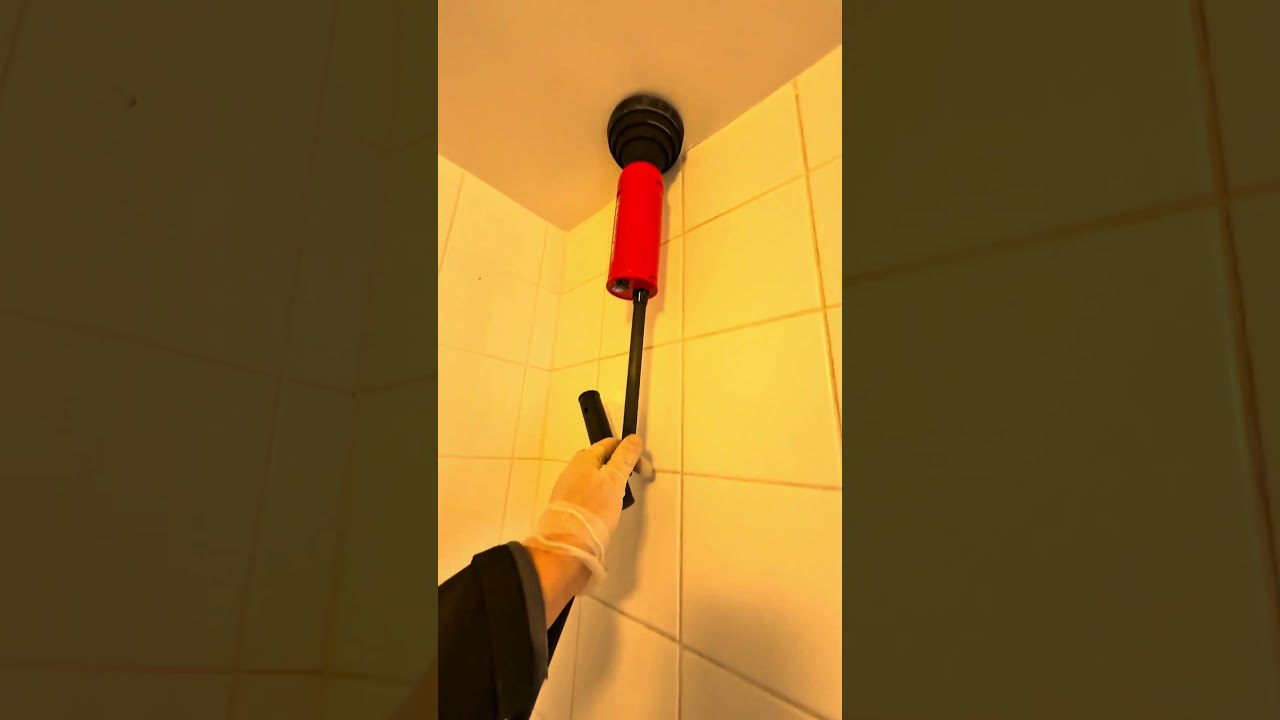
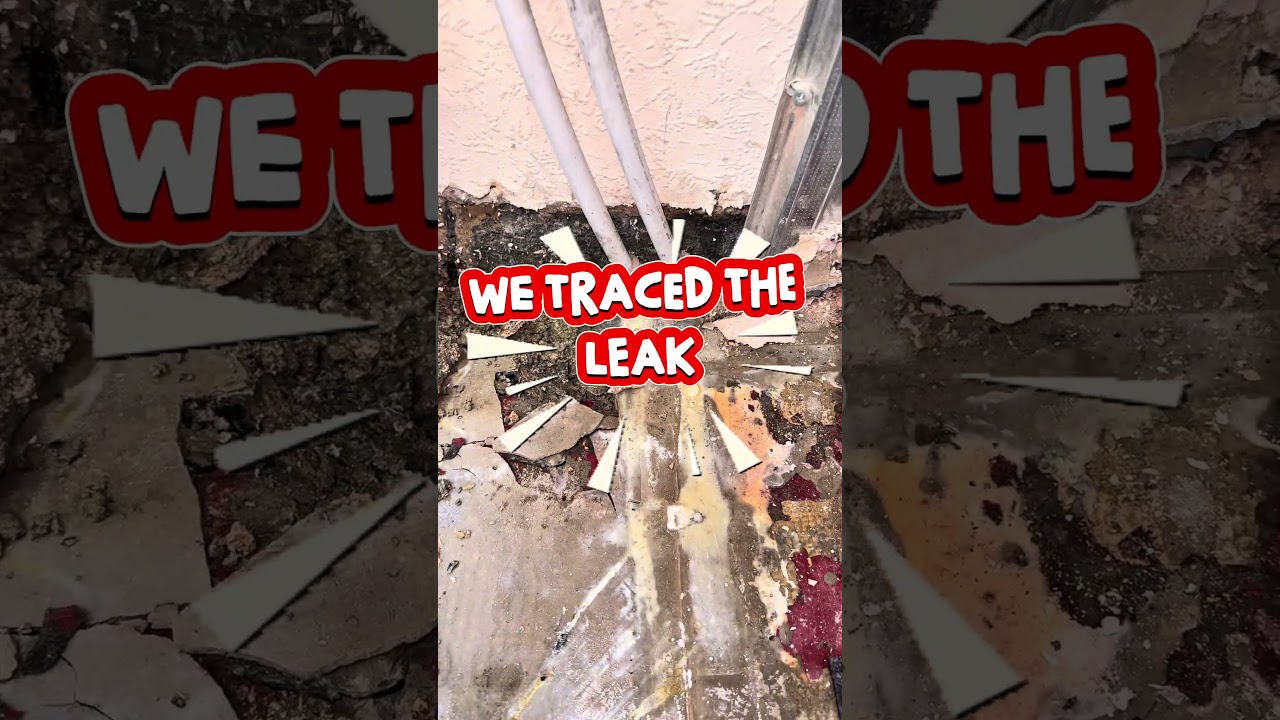
No guessing. No damage. Just clear answers.
Reported Problem
Occupants reported ongoing staining forming on the third-floor bathroom ceiling.
The affected area had been marked to monitor the spread, indicating an active hidden water leak.
Directly above the ceiling area were:
- Washing machine and dryer
- Hot water cylinder installation
No active dripping was visible at the time of inspection, but staining continued to reappear.
This required a structured ceiling leak investigation rather than immediate repair.

Initial Observations
Visual inspection showed irregular moisture patterns across both the corners and central ceiling sections.
Key behaviour:
- Not consistent with condensation
- Not consistent with a single plumbing failure
- Appeared to vary over time
The pattern suggested concealed water entry within the structure rather than surface dampness.
This type of behaviour is common in London properties where water tracks through structural pathways before becoming visible.
Non-Invasive Leak Detection Testing
Thermal Imaging
Thermal imaging was used to identify evaporative cooling patterns caused by moisture.
Result:
Cold signatures were detected across multiple areas of the ceiling.
What this proved:
Moisture was present inside the structure, confirming a hidden water leak rather than cosmetic staining.


Moisture Mapping
Moisture meter readings were taken across the ceiling.
Result:
Elevated readings in both central and corner sections.
What this proved:
Water migration was occurring within the ceiling void and not from a single point.
Internal Camera Inspection
Two inspection cameras were used to inspect concealed pipework.
Result:
- No active dripping observed
- Dried residue beneath pipe joints
- Historic leak marks around waste connections
What this proved:
An intermittent waste pipe leak had occurred during appliance discharge cycles.
External Source Investigation
Further checks above the ceiling identified rainwater tracking from the roof structure.
Result:
Roof ingress confirmed, entering the same cavity.
What this proved:
The ceiling leak had two independent sources.
Isolation Process
Ruled out:
- Condensation
- Continuous pressurised pipe leak
- Appliance overflow alone
Confirmed:
A dual-source hidden water leak affecting the same ceiling zone.


Root Causes Identified
1. Roof Leak
Rainwater enters through a defect and tracks through structural pathways.
2. Waste Pipe Leak
Intermittent discharge leakage beneath the bathroom area.
Technical Explanation
The leak behaved inconsistently because two mechanisms operated separately:
The waste pipe leaked only during appliance discharge, leaving residue but not continuous dripping.
The roof leak occurred during rainfall and followed structural routes until reaching the same ceiling point.
Because both entered the same cavity, symptoms changed depending on the weather and appliance use.
This explains why repairs without a full diagnosis often fail in similar London ceiling leak cases.
Outcome and Required Works
Repair requires access and correction of the plumbing installation.
Works required:
- Partial floorboard removal
- Replacement of the faulty waste pipe
- Adjustment of the washing machine waste connection
- Adjustment of hot water cylinder PRV connections
- Reinstatement of affected areas
Roof repair required separately.
Estimated plumbing works: £1,990 + VAT

Why this Matters (Common London Scenario)
Many ceiling leaks in London properties are misdiagnosed as single plumbing faults.
When a hidden water leak has multiple sources, repairing only one increases cost and prolongs damage.
Accurate diagnosis prevents repeated opening of ceilings and unnecessary trace-and-access repairs.
Professional leak detection in London requires confirming the source before repair.
Practical Lesson
If staining worsens during rain but also appears after appliance use, the issue is unlikely to be a single leak.
Both structural ingress and plumbing discharge must be investigated.
Decision Rule
If a ceiling leak changes behaviour depending on weather or usage patterns, repair work should not begin until a full diagnostic investigation confirms all sources.
Structured Summary
Location: NW6 North West London
Type: Ceiling leak investigation
Method: Non-invasive leak detection, thermal imaging, moisture mapping, internal inspection
Finding 1: Intermittent waste pipe leakage
Finding 2: Roof rainwater ingress
Cause: Dual independent water sources
Action: Plumbing replacement and roof repair
The guidance provided reflects documented leak detection and plumbing services completed by MML Plumbing Ltd in North London. You can see our verified business details on our Google listing.

Diagnostic FAQs
Why does a ceiling leak come and go?
Intermittent plumbing leaks occur during appliance discharge, while roof leaks occur during rainfall. When both exist, symptoms appear inconsistent.
Can rainwater look like a pipe leak?
Yes. Water entering from above often exits around pipes, creating a false plumbing diagnosis.
Why was no dripping visible during inspection?
Waste leaks only occur during discharge cycles and may leave residue without active dripping.
Why do repairs sometimes not solve the problem?
Because another hidden source remains active. Dual-source leaks are common in older London buildings.
When should a leak be investigated before repair?
If staining returns after repair or changes during rain, a diagnostic leak detection investigation is required.
Real Leak Detection Examples From North London Homes